

Roofs Assessed and Repaired After Severe Weather
Storm Damage Roof Repair in Farmington Hills for hail strikes, wind-lifted shingles, and compromised flashing after Michigan storm events
Hail striking a roof at impact velocity leaves bruising in the shingle mat that is invisible from the ground but accelerates shingle failure within one to three years. Damaged sections allow water infiltration that saturates insulation, degrades decking, and eventually shows up as interior staining—often long after the storm that caused it. 800 New Look inspects and repairs storm damage to roofs across Farmington Hills and Oakland County, identifying the full extent of hail, wind, ice, and snow load damage rather than addressing only what is visible from the eave line.
Michigan storm seasons produce layered damage patterns. A single event can combine wind-lifted tab edges, hail impact points across field shingles, and compromised flashing where wind forced open sealed edges. The inspection process covers all three zones: the field of the roof where hail strikes are concentrated, the perimeter where wind damage begins, and the penetration points—chimneys, vents, and skylights—where flashing movement creates immediate water entry risk. Affected shingles are repaired or replaced, compromised flashing is resealed or reinstalled, and any area where water entry has already begun is addressed before further moisture reaches the structure beneath. All work is performed to insurance documentation standards.
Schedule a post-storm roof inspection to document damage before weather conditions change the evidence on the surface.
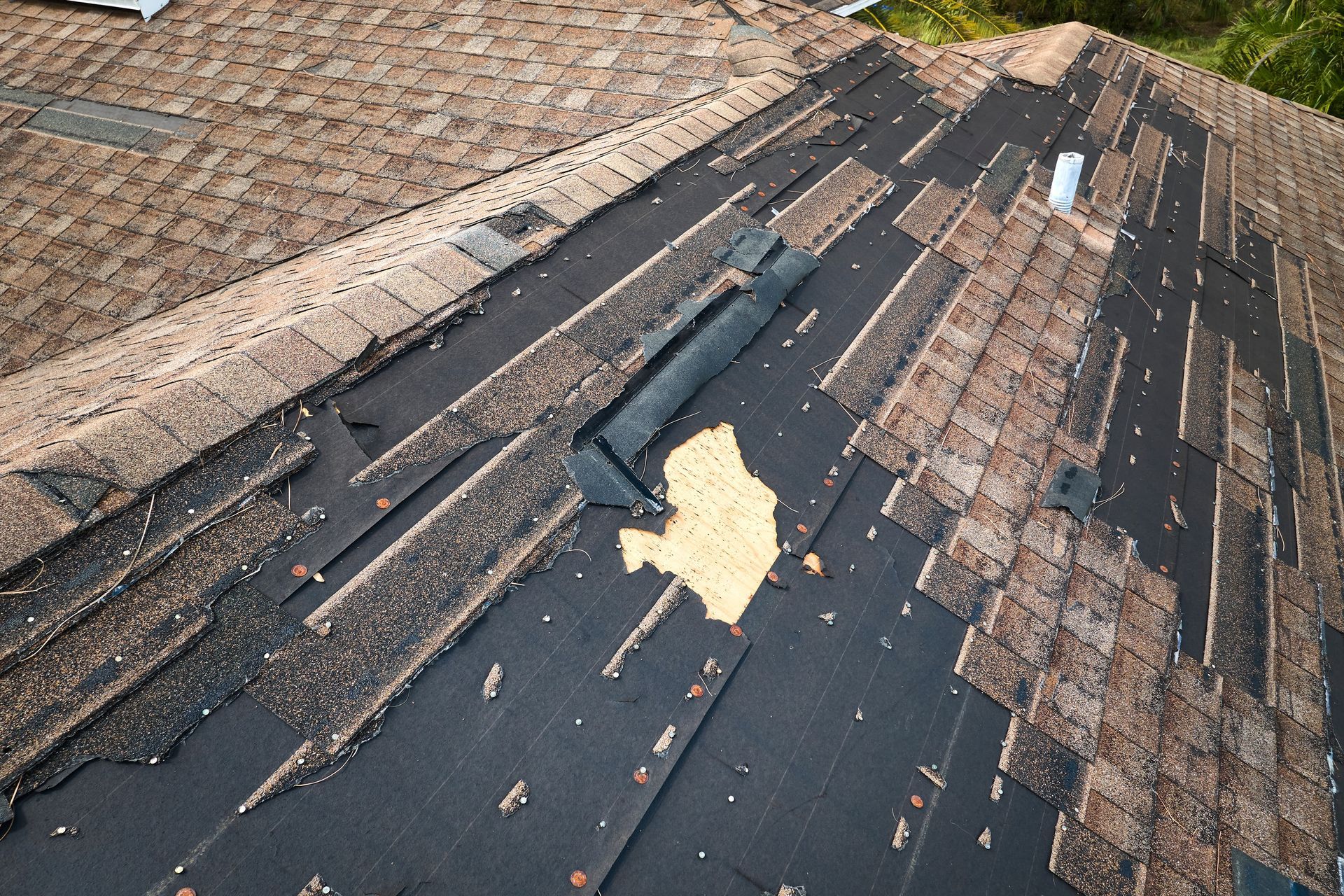
What Proper Storm Damage Assessment Requires
Hail damage assessment requires more than a visual pass across the surface. Confirming impact damage involves checking shingle granule displacement, mat bruising, and the condition of soft metals—ridge caps, vents, and flashing—where hail strikes leave measurable indentations that support insurance documentation. As a GAF Master Elite and Owens Corning preferred contractor, 800 New Look completes repairs to manufacturer specifications, which supports the integrity of lifetime warranties on qualifying work. Documentation is compiled to meet insurance adjuster standards, including photographs of impact points, granule loss zones, and compromised flashing edges.
Once storm damage repairs are finished, the observable result is a roof surface with continuous shingle coverage, no lifted tab edges at the perimeter, and sealed flashing at every penetration point. Attic inspection after repair should show no daylight at ridge lines or rafter bays, and insulation should remain dry in the weeks following the next rainfall. Wind-repaired sections show consistent fastening patterns with no exposed shanks, and hail-replaced shingles align flush with adjacent courses.
Snow load damage is a less recognized storm category but one that appears regularly in Oakland County after significant accumulation events. Ice buildup at eaves combined with the weight of accumulated snow stresses sheathing and can crack or displace shingles along the lower roof section. This damage type is addressed separately from standard hail or wind repairs, and the scope is confirmed during inspection rather than estimated from the ground.
What Property Owners Usually Ask About Storm Repairs
Property owners dealing with storm damage often have questions about what the inspection covers, how insurance documentation works, and whether visible damage reflects the full scope of what needs repair. The following answers address the most frequent questions that come up after a storm event in Farmington Hills and the surrounding Oakland County area.
How does hail damage differ from normal shingle wear, and why does it matter for repairs?
Hail impact fractures the shingle mat and dislodges the granule layer that protects against UV degradation and water shedding. Unlike general aging, which causes uniform surface wear, hail damage creates discrete impact points that accelerate failure in concentrated zones while surrounding shingles remain intact.
What does the storm damage inspection process actually involve?
The inspection covers the full roof field for granule displacement and mat bruising, checks perimeter edges for wind-lifted tabs, examines all flashing points for movement or separation, and assesses soft metals for impact indentations that confirm hail contact.
When should I schedule a storm damage inspection in Farmington Hills?
Inspections should be scheduled as soon as it is safe to access the property after a storm. Granule displacement and impact bruising are most clearly visible before subsequent weather events, and early documentation strengthens insurance claim submissions.
Why does wind damage often appear at the roof perimeter before anywhere else?
Wind uplift acts on the exposed edges of shingles first—tab edges and perimeter courses experience the greatest lift force. Once a tab edge lifts and the sealant strip releases, progressive peeling can extend several courses inward with each subsequent wind event.
How is snow load damage identified on a roof after a heavy Michigan winter?
Snow load stress shows as cracked or displaced shingles along the lower roof section, compressed decking at mid-span, and shifted ridge lines in severe cases. An attic inspection confirms whether the structural assembly beneath absorbed the load without deflection.
800 New Look brings over two decades of experience handling Michigan storm seasons and insurance-backed roof repairs to every project in Oakland County. Submit your property address to begin a documented storm damage assessment.