

Cracked Panels Sealed Before Moisture Reaches Framing
Siding Repair in Farmington Hills for cracked, warped, loose, or separated panels that expose wall sheathing to water infiltration
A cracked or separated siding panel stops being a cosmetic issue the moment water finds a path behind it. Once moisture reaches wall sheathing, it begins degrading the wood substrate before any interior sign appears—insulation compresses, framing softens, and mold establishes in cavities that are not visible without opening the wall. 800 New Look repairs damaged siding in Farmington Hills and Oakland County, locating every compromised section and sealing the exterior envelope before moisture penetration progresses to the structural layer beneath.
The repair process begins with a perimeter inspection to locate cracked, warped, loose, or separated panels—including sections where caulking at window and door trim has failed and left open seams. Michigan's temperature swing between winter lows and summer highs causes panel expansion and contraction cycles that loosen fasteners, crack brittle profiles, and pull caulked joints open over time. Each compromised section is repaired or replaced individually, with new panels matched as closely as possible to existing profiles and colors so the repaired areas do not stand out against the surrounding exterior. Fastening is checked across adjacent sections as well, since a loose panel nearby is a repair that will be needed soon regardless.
Request a siding inspection to identify every open seam and cracked panel before freeze-thaw conditions drive moisture further into the wall assembly.
What Siding Repair Actually Accomplishes
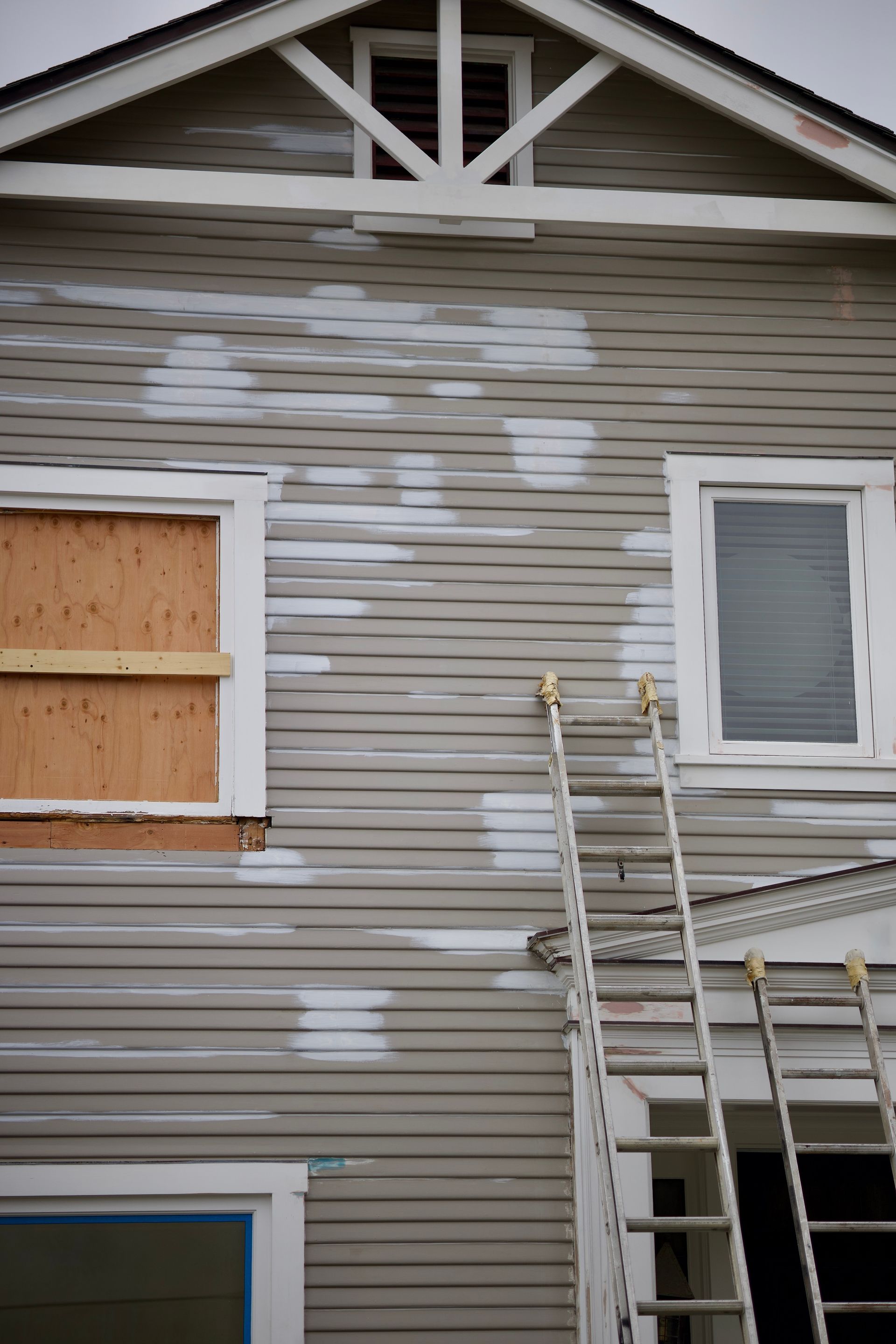
Siding repair is not only about closing a visible gap—it restores the continuous drainage plane that the exterior cladding system depends on to move water away from sheathing and framing. When panels are loose or separated, water does not just enter through the visible crack; it wicks laterally behind adjacent sections and pools at horizontal fastening lines. 800 New Look inspects the wall surface beyond the visibly damaged area to confirm how far moisture has already migrated, which determines whether the repair scope covers one panel or several surrounding sections.
After repairs are complete, the visible result is a continuous exterior surface with no lifted edges, no open seams at panel joints or trim transitions, and no sections that flex or rattle when pressed. The repaired panels align with the surrounding courses in profile height and reveal, and color matching reduces the visual contrast between new and existing material. More importantly, the wall assembly behind the repaired zone is no longer exposed to water during rain events or snow melt.
The decision between repairing damaged sections versus replacing the full siding system depends on the condition of the surrounding panels. When damage is isolated to a defined zone and adjacent panels retain their structural integrity and fastening, repair is the appropriate scope. When inspection reveals that cracking, warping, or fastener failure has spread across more than a third of the wall surface, a full installation conversation is warranted. The inspection findings determine which direction makes structural and financial sense.
Questions Before Starting Your Siding Project
Homeowners in Farmington Hills dealing with damaged siding typically have questions about what the repair includes, how matching works, and what happens if the sheathing beneath the panels has already been affected. The following answers address the most practical concerns before work begins.
How do I know if water has already reached my wall sheathing through damaged siding?
Signs include soft spots when pressing on the exterior wall surface, paint bubbling on interior walls adjacent to the damaged section, musty odor in nearby rooms, and visible staining on the sheathing once panels are removed during repair. The inspection confirms the extent before repair scope is finalized.
How closely can replacement panels be matched to existing siding color and profile?
Match quality depends on the siding material type, the manufacturer's current production, and how much the existing panels have faded over time. Vinyl and fiber cement profiles are generally available in standard dimensions, and color can be matched to current product lines, though weathered panels may show contrast with new material initially.
Why do siding panels crack or warp in Michigan climates specifically?
Oakland County's temperature range from well below freezing in winter to high humidity summer heat causes repeated expansion and contraction cycles in vinyl panels. Panels installed without adequate expansion gaps or with fasteners driven too tight cannot move freely and crack at stress points over time.
What is included in a siding repair versus what requires additional work?
Siding repair includes removing and replacing compromised panels, checking fastening on adjacent sections, and sealing trim and caulking at the repaired zone. If sheathing damage is discovered during panel removal, that repair is addressed separately and confirmed with the homeowner before proceeding.
When is the best time of year to schedule siding repairs in Farmington Hills?
Repairs can be performed across most of the year, but addressing open panels before winter is practical because water behind siding freezes, expands, and accelerates sheathing damage. Caulk and sealant application also performs best above freezing temperatures.
800 New Look has repaired siding on homes across Farmington Hills and Oakland County since April 2005, with lifetime warranty coverage on qualifying work. Call (248) 306-9225 to arrange an exterior inspection and confirm the full scope of what your siding currently needs.