

Gutters That Fail After a Storm Cost More Later
Storm damage gutter repair in Farmington Hills for sections pulling away from fascia, leaking at seams, or backing up after heavy rain and hail
Standing water along a foundation, soffit staining, and gutters that visibly sag or pull away from the fascia board are the signs that a storm has done structural damage to the drainage system rather than cosmetic surface marks. 800 New Look inspects and repairs storm-damaged gutters across Farmington Hills and southeast Michigan, identifying where the system has failed and why—not just the section that is visually displaced. The service includes insurance documentation for homeowners whose policies cover storm-related gutter damage.
Michigan storms produce multiple failure points in a single gutter run because high wind, hail, and heavy rain volume all act on the system simultaneously. Wind forces hangers loose from the fascia, which changes the pitch of the run and causes water to pool rather than flow to the downspout. Hail collapses the gutter profile at impact points, which restricts flow even when the hanger spacing is still correct. Heavy rain that exceeds the original system's capacity forces water over the back edge, which over time saturates the fascia board and the soffit behind it. The inspection process covers the full gutter run—hangers, seams, joints, end caps, downspout connections, and the condition of the fascia—to locate every failure point in a single visit.
Request a storm damage inspection to identify which sections of your gutter system require repair and what documentation your insurer will need to process the claim.
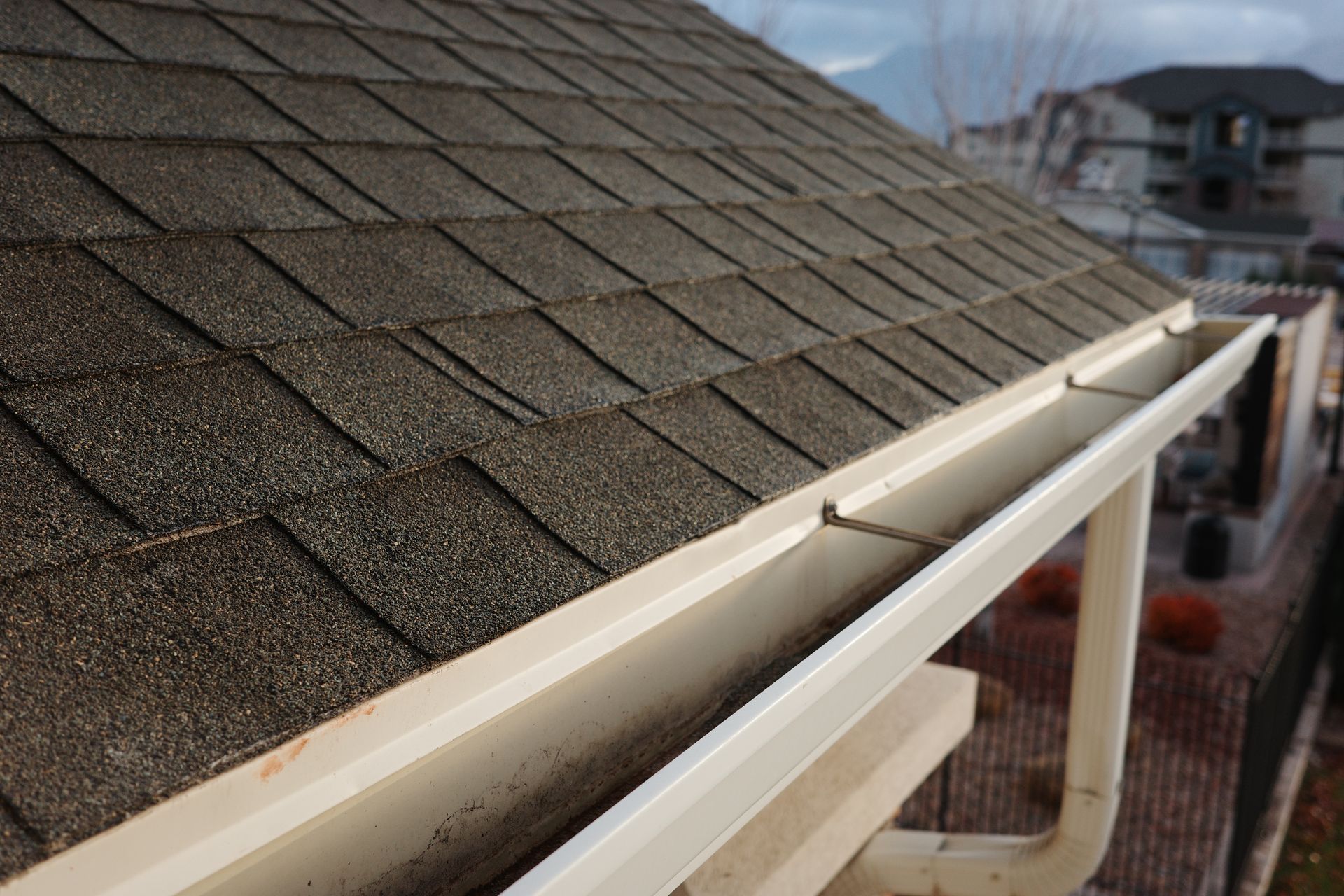
Why Gutter Failures Happen and How to Stop Them
Gutter repair after storm damage involves addressing the specific mechanical failure rather than applying a general fix to the visible section. A seam that has opened under hail impact is sealed at the joint with appropriate gutter sealant after the faces are cleaned and dried; a hanger that pulled out of the fascia is re-secured with a longer fastener driven into solid wood behind the fascia face, because the original fastener hole is no longer holding. When the fascia board itself has rotted from repeated water exposure, the board is replaced before the hanger is re-installed, because re-securing into rotted wood produces the same failure on the next wind event.
After repairs are complete, the gutter run should hold its designed pitch—typically a quarter inch of drop per ten feet of run toward the downspout—and water should move through the system without pooling, leaking at joints, or overflowing the back edge. The soffit and fascia below the repaired sections should stay dry after rain, which is the clearest indicator that the water path is contained again. If the system has been pulling away from the fascia long enough to saturate the board behind it, that drying-out period may take several weeks of dry weather before the wood stabilizes.
In cases where multiple sections of a gutter run are damaged, 800 New Look assesses whether targeted repairs restore the system to full function or whether full replacement is the more cost-effective outcome. Some older sectional gutter systems have accumulated enough seam failures and hanger pull-outs that repair costs approach replacement costs, and that comparison is explained clearly before any work is authorized. The inspection is provided at no charge, and the damage documentation is prepared for insurance submission whether the final scope is repair or replacement.
Answers to Frequent Gutter Service Questions
These questions reflect what homeowners in Farmington Hills, Novi, and Plymouth most often ask when dealing with storm-damaged gutters for the first time.
How do I know if my gutters were damaged by the storm or were already failing before it?
Storm damage typically produces concentrated impact dents, newly opened seams at specific points, and hanger pull-outs that correspond to wind direction—pre-existing failure tends to show gradual sagging along the full run rather than localized damage, and the inspection report distinguishes between the two for insurance purposes.
What parts of the gutter system get inspected after a storm?
The full run is inspected, including hangers, seam and joint integrity, end caps, downspout connections, the gutter profile for collapse or denting, and the condition of the fascia board behind the system.
Can I claim gutter damage from a storm on my homeowners insurance in Michigan?
Most standard homeowners policies cover storm damage to gutters caused by wind, hail, or falling debris, provided the damage is documented and the claim is filed within the policy's reporting window—the inspection report 800 New Look prepares is structured to meet those requirements.
Why does gutter pitch matter more in Michigan than in drier climates?
Southeast Michigan's combination of heavy spring rain events and freeze-thaw cycles means standing water in a low-pitched section will freeze, expand the section, and force seams open over winter—correct pitch prevents that cycle from starting.
What happens if the fascia board is rotted behind the gutter?
Rotted fascia cannot hold hanger fasteners, so the gutter will pull away again after the first wind event; the board is replaced as part of the repair scope rather than treating the symptom without addressing what caused it.
800 New Look provides free storm damage inspections with full documentation prepared for insurance submission—call (248) 306-9225 to schedule a gutter inspection and get the claims process started.