

New Siding Installed to Prevent Hidden Wall Damage
Siding Installation in Farmington Hills for homes with failing exterior cladding that allows moisture intrusion and heat loss through wall assemblies
Removing old siding reveals the actual condition of the wall beneath it—sheathing that has absorbed moisture over years of failed cladding shows rot, soft spots, and in some cases mold that would never be visible from the exterior surface. 800 New Look installs new siding on homes in Farmington Hills and Oakland County, beginning with a thorough inspection of wall sheathing after old material is removed so that any substrate damage is repaired before new cladding goes on. Installing new siding over compromised sheathing produces a wall assembly that looks correct from the outside while continuing to fail structurally from within.
The installation sequence matters as much as the material selection. After old siding is stripped and sheathing is inspected and repaired where needed, a moisture barrier is installed across the full wall surface before any new panels go on. This barrier is lapped and sealed at seams to create a continuous drainage plane—the layer that directs any incidental water that gets behind the siding down and out of the wall rather than into the framing. Panels are then installed with proper overlap and fastening, and flashing is set at window frames, door surrounds, and any wall penetrations to code. Ventilation behind the siding is maintained throughout to prevent the moisture accumulation that causes premature panel failure regardless of material type.
Arrange a property evaluation to assess your current siding condition and confirm what the wall sheathing beneath it requires before installation begins.
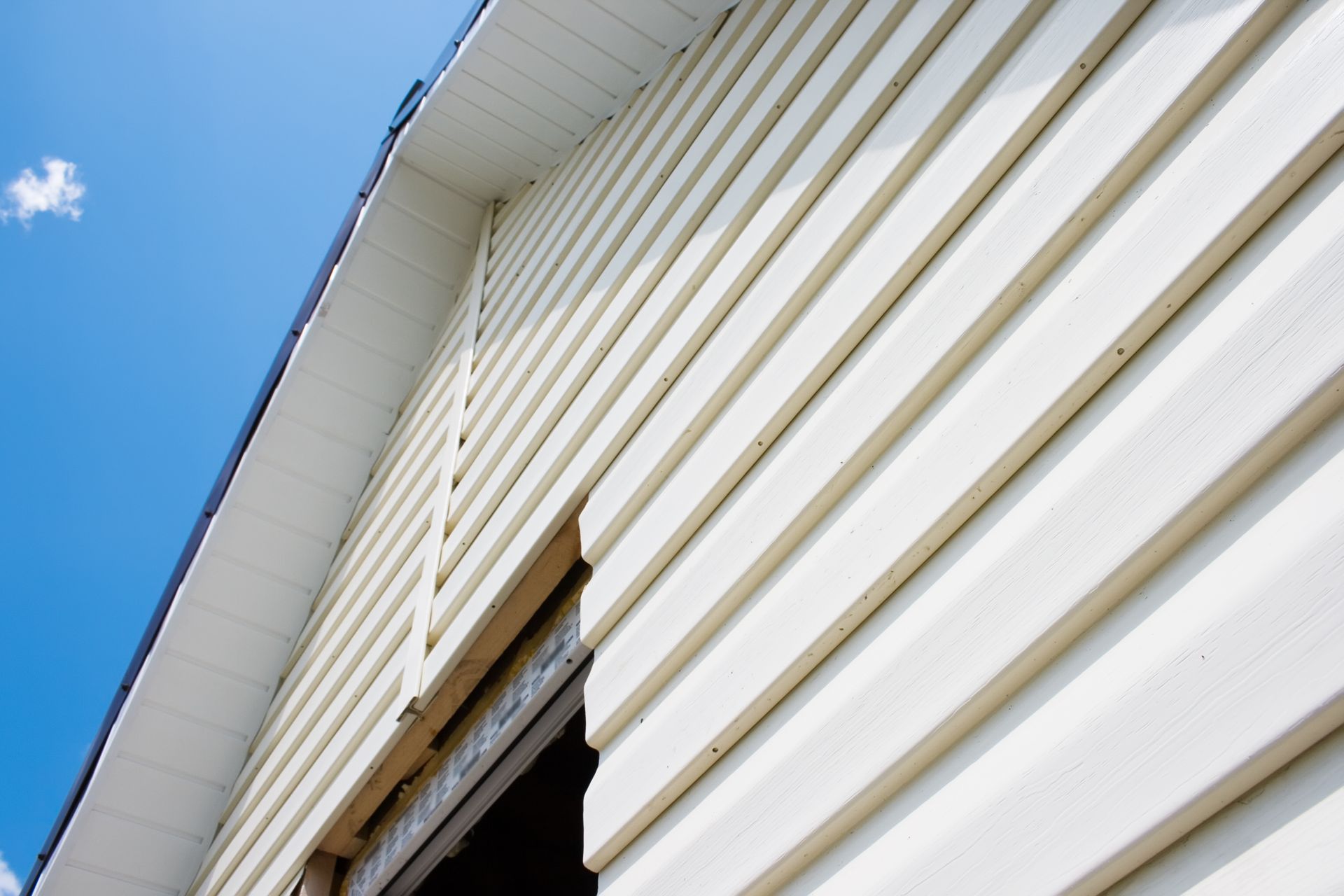
The Difference Between Correct Installation and a Shortcut
The installation details that separate durable siding from a premature failure are not visible once the job is complete—moisture barrier lapping, fastener spacing, expansion gap sizing, and flashing integration are all buried behind the finished panel face. As an Owens Corning preferred contractor and GAF Master Elite contractor, 800 New Look installs to manufacturer specifications that govern each of these concealed details, which is the requirement for qualifying work to carry a lifetime warranty. Those specifications exist because installation shortcuts that save time during the job create the exact failure modes—panel cracking, water infiltration, and fastener pull-through—that homeowners call about years later.
After installation is complete, the observable changes are measurable. Interior walls adjacent to the new siding no longer show temperature variation at the surface in winter, because the continuous moisture barrier and properly fastened panels eliminate the convective pathways that allowed conditioned air to escape. The exterior surface shows consistent panel reveal and alignment with no wavy courses or lifted edges at trim transitions. Flashing at windows and doors presents a clean, integrated seal with no exposed gaps where water could track behind the frame.
The scope of a siding installation also includes decisions about trim, corner treatments, and soffit and fascia condition. If existing trim profiles are deteriorated, installing new siding against them creates immediate seal failures at the perimeter. Those components are reviewed during the initial evaluation so the installation scope accounts for every surface that the new siding must terminate against cleanly. Northville and Howell properties with older wood trim profiles often require trim replacement as part of the installation scope to ensure the finished assembly performs correctly.
What Homeowners Ask Before a Siding Installation
Full siding installations involve more decisions and a longer project scope than most homeowners anticipate before the first conversation. The questions below address what the process involves, how material choices affect the outcome, and what to look for when evaluating a contractor's installation approach.
What happens to the old siding during removal, and what does that reveal?
Old siding is stripped back to the sheathing, which is then inspected for moisture damage, rot, and fastener failure. Sheathing condition determines whether substrate repairs are needed before the moisture barrier and new panels can be installed correctly.
How does a moisture barrier function behind new siding, and why does it matter in Michigan?
The moisture barrier redirects any water that passes behind the siding panels downward and out of the wall assembly rather than allowing it to contact the sheathing. In Oakland County's climate, where freeze-thaw cycles and wind-driven rain are seasonal, a properly lapped and sealed barrier is the difference between a wall that stays dry and one that absorbs moisture each winter.
What should I ask a siding contractor about their installation process before hiring them?
Ask specifically how flashing is handled at windows and doors, how expansion gaps are sized for the panel material being used, and whether a moisture barrier is included in the scope. Contractors who cannot explain these details have likely not prioritized them during installation.
How is fastening approach different for vinyl versus fiber cement siding panels?
Vinyl requires fasteners driven with space to allow for thermal expansion—panels driven tight will buckle in summer heat. Fiber cement is face-nailed or blind-nailed depending on profile and requires corrosion-resistant fasteners because the material holds moisture at penetration points when improper hardware is used.
Why does flashing at windows and doors matter so much in a siding installation?
Window and door frames are the most common water entry points in a siding system because they interrupt the continuous panel field. Properly installed flashing integrates with the moisture barrier and extends over the top of each frame, directing water outward rather than allowing it to track behind the new panels and into the rough opening.
800 New Look has completed siding installations across Farmington Hills and Oakland County since April 2005, with manufacturer-specified installation methods and lifetime warranty coverage on qualifying work. Call (248) 306-9225 to schedule a wall assessment and begin planning your installation scope.