

Walls That Keep Moisture Outside for Good
Siding replacement in Farmington Hills for homes with failing panels that allow moisture behind the wall assembly
Warping panels, visible gaps at seams, and interior walls that feel cold despite adequate insulation are the observable signs that a home's siding has stopped functioning as a weather barrier. 800 New Look replaces siding on homes across Farmington Hills and southeast Michigan, addressing systems where repair would only treat symptoms while the underlying wall assembly continues to take on moisture. Homes in neighborhoods like Brighton and Clarkston that were originally clad in older aluminum, wood, or early-generation vinyl frequently show these failure patterns as materials fatigue through decades of Michigan freeze-thaw cycles.
The replacement process involves full removal of existing panels rather than overlapping new material over old—a step that matters because it exposes the wall sheathing and framing for direct inspection. Sections with moisture damage, soft spots, or rot are repaired or replaced before new siding goes on. Installation follows a sequence of proper fastening depth and panel overlap to allow thermal movement without buckling, and all joints at windows, doors, corners, and utility penetrations receive new flashing to direct water away from the wall rather than into it.
Schedule a siding evaluation to identify which sections of your exterior have active moisture intrusion and what replacement approach fits your wall assembly.
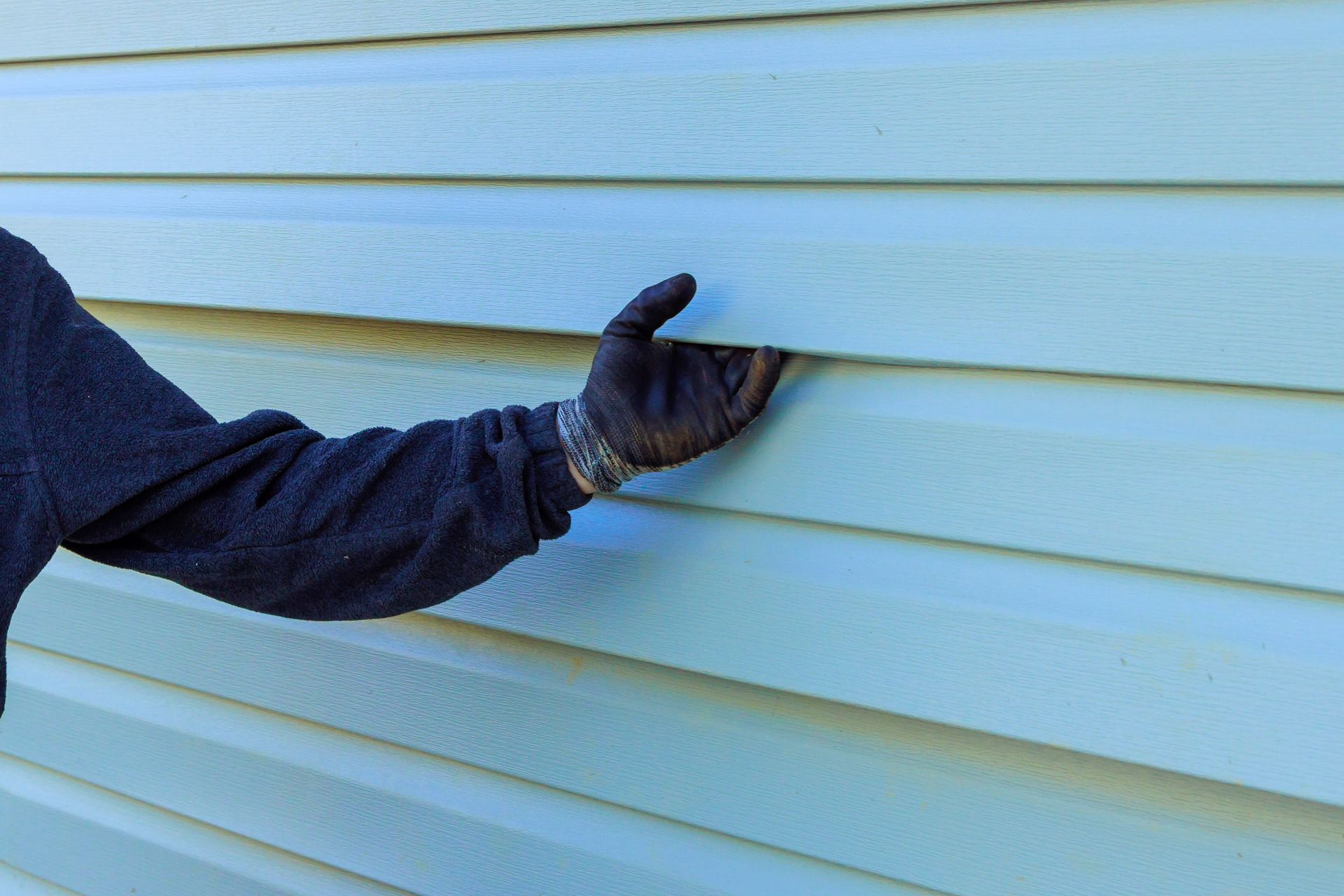
Why Full Removal Matters Before New Siding Goes On
Installing new siding directly over existing panels—a common shortcut—eliminates the opportunity to inspect the wall sheathing for damage that is invisible from the exterior surface. In Michigan's climate, where siding is cycled through repeated freeze and thaw events annually, moisture that has breached the old system accumulates in sheathing and framing long before it produces visible interior staining or mold. When 800 New Look removes the existing system entirely, any compromised sections are visible immediately and addressed as part of the same project rather than discovered later during unrelated renovation work.
After replacement is complete, the wall reads differently in winter—rooms adjacent to exterior walls hold temperature more consistently because the continuous barrier between conditioned interior air and outside conditions is restored. Seams no longer open at cold temperatures, panels sit flat against the wall without the ripple or wave that indicates improper fastening or moisture swelling, and trim lines at windows and doors are tight rather than showing the gap lines that accumulate as old caulk shrinks and fails over time.
Siding replacement also involves decisions about material type that affect how the finished wall performs decade to decade. Fiber cement holds paint longer than wood and resists insect damage, while engineered wood products offer a textured appearance closer to natural wood without the same moisture vulnerability. The fastening pattern, overlap depth, and flashing details at transitions are equally important—these are the installation variables that determine whether new siding performs correctly or begins showing problems within a few years of installation.
What Property Owners Usually Ask About Siding Replacement
Siding replacement involves more decisions than most homeowners expect, particularly when wall sheathing condition is unknown before work begins. The questions below address the specifics that come up most often during consultations.
How do you identify whether wall sheathing needs repair before new siding is installed?
During removal, the sheathing is inspected by hand and visually—soft areas, discoloration, and delamination in OSB or plywood are the indicators that confirm moisture has been penetrating, and those sections are replaced before the new system goes on.
What causes siding to fail prematurely on homes in this region?
Michigan's freeze-thaw cycle is a primary driver—water that enters small gaps at seams or penetrations freezes, expands, and widens the gap each winter, accelerating the rate at which the system opens to further moisture intrusion.
Why does flashing at windows and doors matter during a siding project?
Window and door transitions are the most common points where water bypasses siding and reaches wall framing, and new flashing installed during replacement ensures the transition is waterproof rather than relying on caulk alone to carry that load.
When does siding need full replacement versus targeted panel repair?
Panel repair works for isolated physical damage on an otherwise intact system, but when panels show widespread fading, warping, or seam separation across most elevations, replacement is more cost-effective than patching a system that has reached the end of its service life.
How does Farmington Hills' climate affect which siding material performs best long-term?
Materials with low moisture absorption and dimensional stability through temperature swings outperform wood-based options in southeast Michigan—fiber cement and quality vinyl maintain their geometry through seasonal changes better than materials that swell and contract at higher rates.
800 New Look has replaced siding on homes across Farmington Hills with attention to wall assembly condition, not just surface appearance. Connect with the crew directly at (248) 306-9225 to arrange a detailed exterior inspection and estimate based on your home's current siding condition.