If you're searching for radon remediation companies near me Genesee County, you've likely already gotten a test result you didn't love. This guide breaks down what elevated radon actually means for homes in Flint, Burton, Goodrich, and Grand Blanc, how a mitigation system works, and what separates a qualified installer from someone with a fan and a van.
Radon Risk in Genesee County: What the Data Actually Shows
Radon isn't a Genesee County-specific problem, but it isn't rare here either. In Michigan, one in every four homes is projected to have radon levels exceeding the federal action level of 4 picocuries per liter of air, and elevated radon levels have been found in all 83 Michigan counties. That includes homes built decades apart, on slabs, basements, and crawl spaces alike.
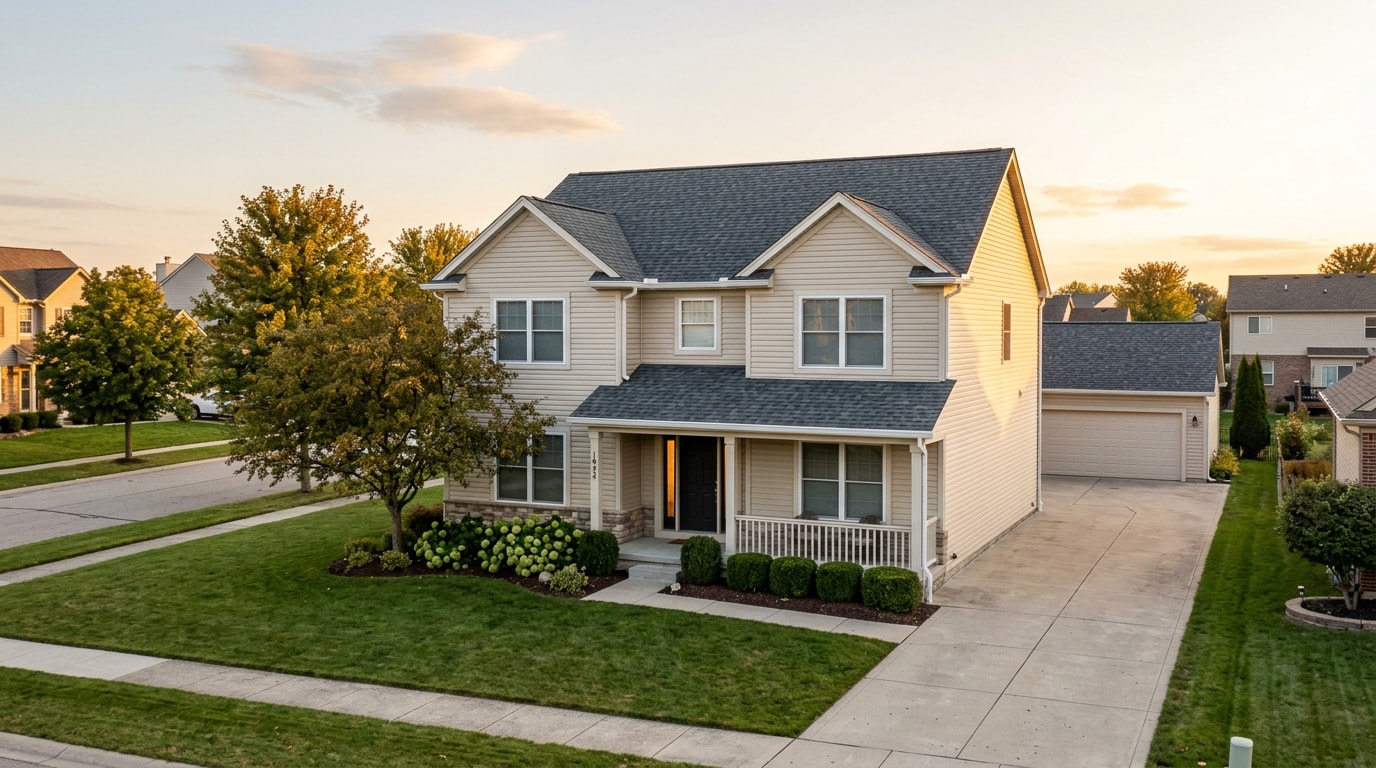
Here's a detail most radon pages skip: Michigan's Residential Building Code currently requires radon-resistant construction techniques in only nine counties, Branch, Calhoun, Cass, Hillsdale, Jackson, Kalamazoo, Lenawee, St. Joseph, and Washtenaw, though elevated radon levels have been found in every Michigan county and the techniques are recommended statewide. Genesee County is not one of the nine. That means a newer Genesee County build may not have passive radon piping already roughed in, so testing matters just as much for new construction as it does for a 1960s ranch.
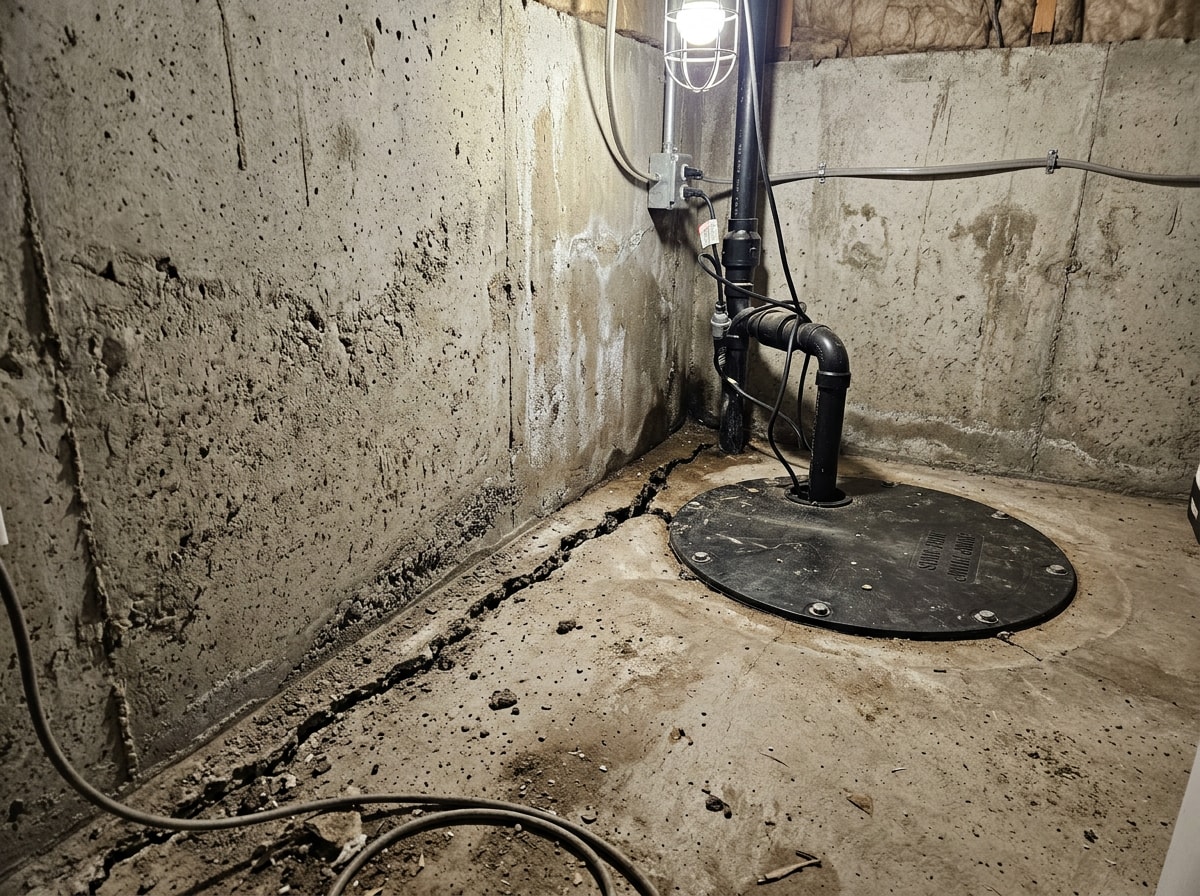
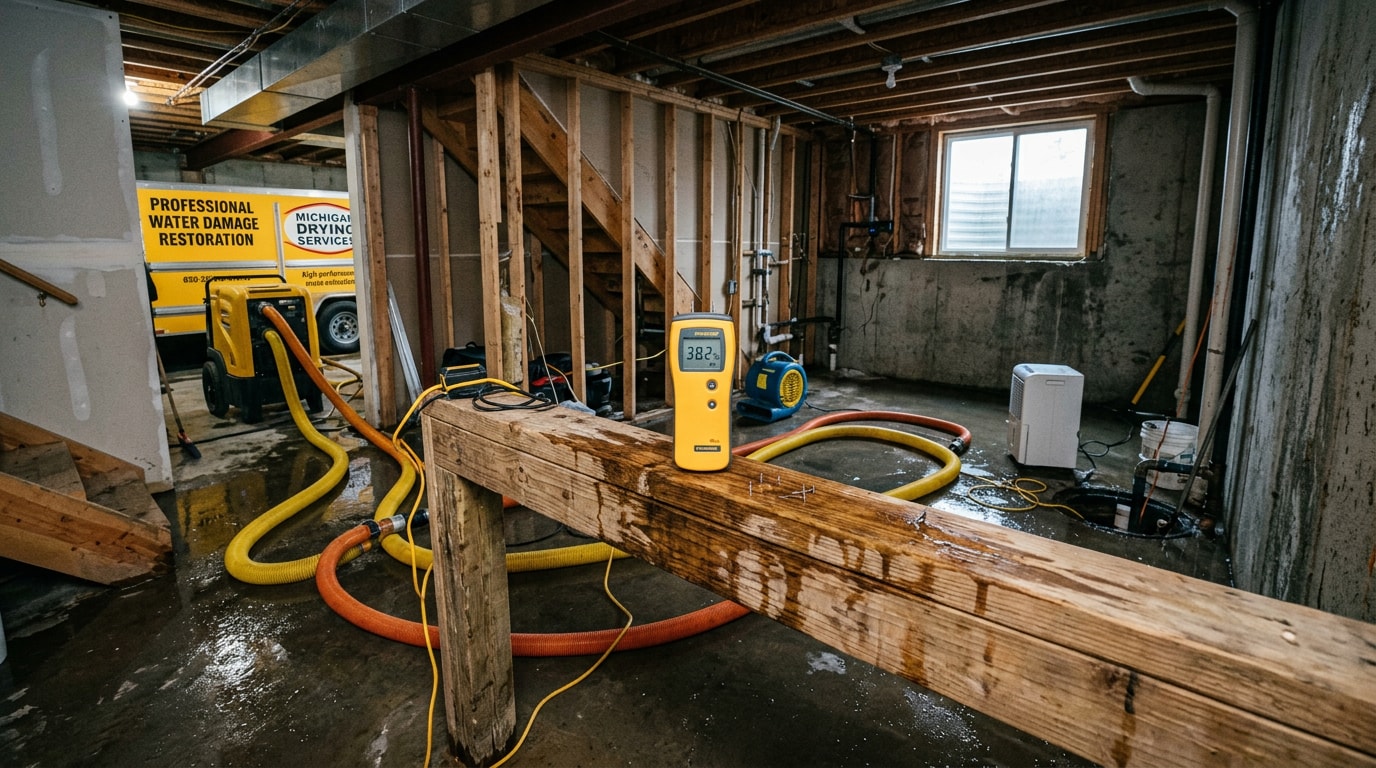
We see this firsthand during storm damage and foundation inspections across Genesee County. Cracked slabs, gaps around sump pits, and unsealed utility penetrations show up constantly, and those same openings are the entry points radon uses to get indoors.
Michigan's Radon Action Level and Why It Matters
The EPA recommends homes be fixed if the radon level is 4 pCi/L or more, and because there is no known safe level of exposure, the agency also recommends considering a fix for levels between 2 pCi/L and 4 pCi/L. For context, the average indoor radon concentration for America's homes is about 1.3 pCi/L, and it's on that national average that the EPA based its estimate of 21,000 radon-related lung cancers a year.
| Test Result | What It Means | Recommended Action |
|---|---|---|
| Below 2 pCi/L | Near background outdoor levels | Retest periodically |
| 2 to 4 pCi/L | Above WHO's reference level | Consider mitigation |
| 4 pCi/L or higher | EPA action level reached | Mitigation recommended |
Michigan's own health program backs this up. Radon is considered a serious health hazard and the leading cause of lung cancer for never smokers , according to the state's Indoor Radon Program. The Michigan Indoor Radon Program also runs a free hotline and maintains an interactive map of test results by zip code, which is worth checking before you even schedule a test.
How Professional Radon Testing and Mitigation Actually Works
A legitimate mitigation project moves through three stages, in order, with no shortcuts.
Step 1: Initial Radon Testing
A short-term test runs a few days; a long-term test runs for months and gives a more accurate year-round average. This baseline is what any mitigation company should use to confirm a system is even necessary before quoting one.
Step 2: System Installation
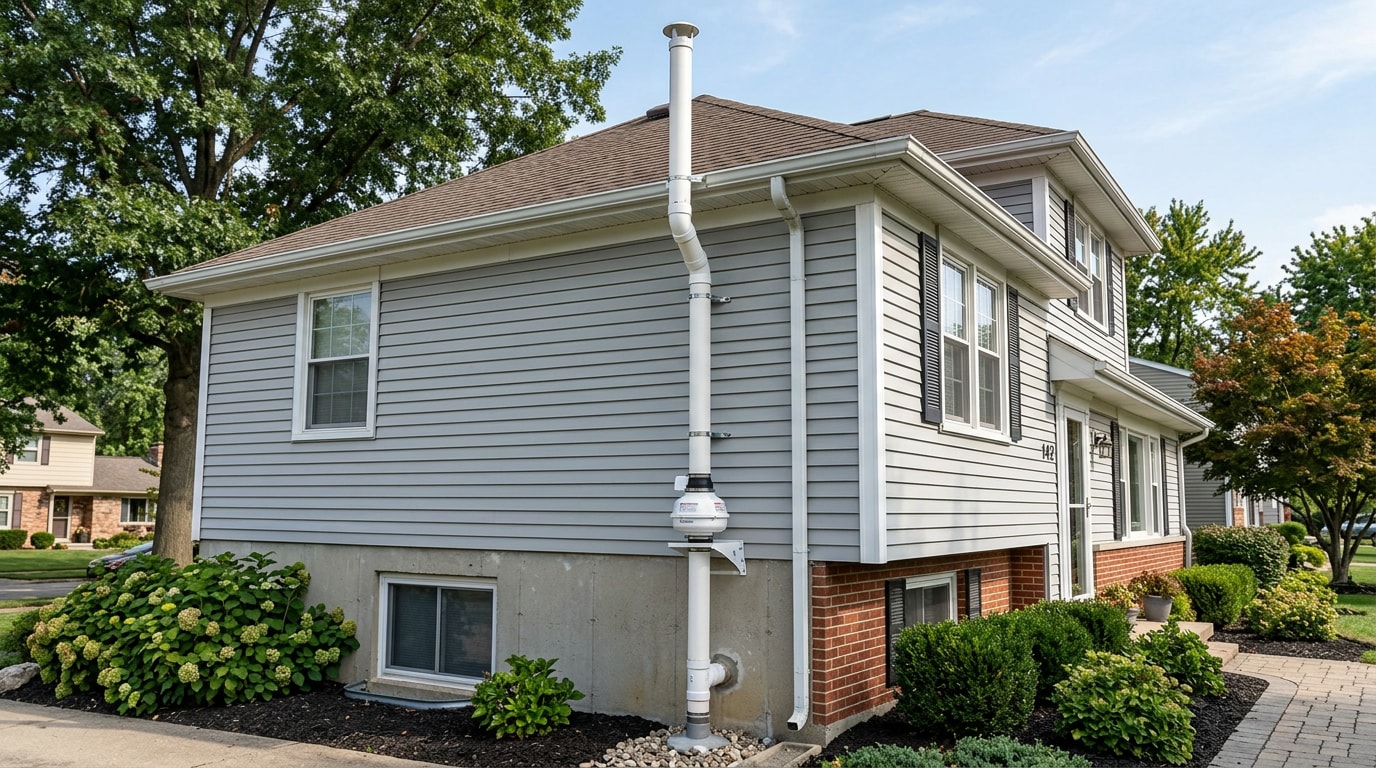
Radon mitigation is any process or system used to reduce radon concentrations in a building, with the goal of bringing the indoor level as low as reasonably achievable. The standard approach is active soil depressurization: a fan creates negative pressure beneath the slab, pulling radon gas into a sealed pipe before it can enter living space. An active system consists of PVC pipe, a label with system and installer information, monitoring devices, and a fan used to exhaust radon outdoors, with the fan typically mounted on the home's exterior or in the attic.
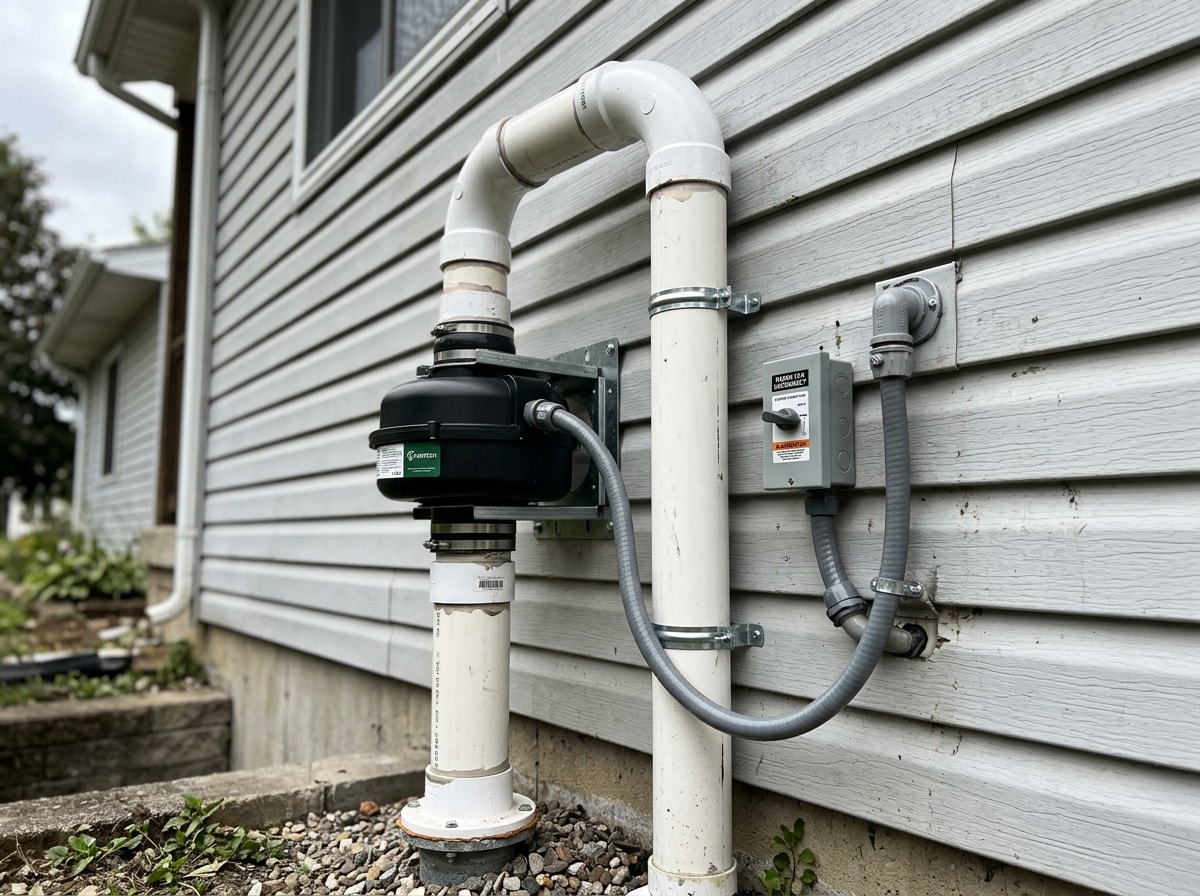
Foundation cracks and gaps around sump pits should be sealed as part of this step too. Sealing alone won't fix a radon problem, but skipping it leaves extra entry points active even after a system is installed.
Step 3: Post-Mitigation Testing
A retest after installation isn't optional. It's the only way to confirm the system actually pulled levels below the EPA's action level, and any contractor who skips it isn't finishing the job.
What to Look for in a Radon Remediation Company Near You
Not every contractor offering "radon services" is actually trained to design a system correctly. Before you sign anything, check for:
- NRPP or NRSB certification.
The National Radon Proficiency Program provides certification credentials for professional radon testers and mitigators, holds ISO 17024 ANAB accreditation, and is governed by a Certification Council made up of radon industry stakeholders.
- Mitigation-specific credentials, not just testing credentials.
The NRPP Radon Mitigation Specialist certification is specifically for those who evaluate radon measurements and design and install radon remediation systems , which is a different qualification than a measurement-only certification.
- A written warranty on the fan and system. Multi-year warranties, often five years, are standard in this industry. Get the terms in writing before work starts.
- A post-mitigation test included in the price. If it's an upsell, keep looking.
- A physical address and real phone number. A traveling crew with no local presence makes warranty claims difficult later.
If you're also dealing with foundation cracks, moisture, or storm-related damage that's letting gas and water both into the basement, see how the Sewer Backup Restoration in Genesee County guide handles similar entry-point problems, and contact HailStorm Pros if you need those structural issues inspected alongside your radon plan.
What Radon Mitigation Costs
Pricing varies by foundation type and how many suction points a home needs, but national figures give a reliable baseline. According to the EPA's Citizen's Guide to Radon, the average cost to install a radon mitigation system is about $1,200, with typical prices ranging from $800 to $2,500 , depending on construction details and fan size.
| System Type | Typical Installed Cost |
|---|---|
| Standard sub-slab depressurization | $800–$2,500 |
| Passive system activation (fan added to existing pipe) | Lower end of range |
| Crawl space or block-wall foundations | Higher end of range |
Get at least two written, on-site quotes rather than a phone estimate. Foundation type and sub-slab conditions change the design enough that remote pricing is usually a guess.
Protect Your Home: Next Steps
Start with testing. If results land at or above the EPA's action level, move to mitigation with a certified installer, then confirm the fix with a post-installation retest. If foundation cracks, sump pit gaps, or storm damage are part of the picture, those need attention too, since they're often the same openings letting in both water and gas. Get a free estimate for a structural inspection, or start on the HailStorm Pros homepage to see the full range of services we handle around Genesee County homes.
FAQ
What is a radon mitigation system?
It's a fan-and-pipe system that pulls radon gas from beneath a home's foundation and vents it outdoors before it can enter living space, typically using active soil depressurization.
What radon level is considered dangerous?
The EPA recommends fixing a home at 4 pCi/L or higher, and recommends considering a fix between 2 and 4 pCi/L since no level of exposure is fully risk-free.
How much does radon mitigation cost?
Typical installation costs range from $800 to $2,500, averaging around $1,200 , according to EPA cost data. Crawl spaces and block-wall foundations often land at the higher end.
Is radon actually a problem in Genesee County, Michigan?
Yes. Roughly one in four Michigan homes is projected to exceed the federal radon action level, and elevated levels have turned up in all 83 counties statewide , including Genesee County.
How long does radon mitigation take?
Most standard installations are completed in a single day. More complex foundations, like multiple suction points or crawl space encapsulation, can take longer.
Do I need a radon test before buying a home in Genesee County?
It's strongly recommended. Radon levels vary by lot even within the same neighborhood, and a pre-purchase test gives you negotiating leverage if mitigation is needed.
How do I find a certified radon company near me?
Confirm NRPP or NRSB certification directly, ask for the mitigation-specific credential (not just testing), and check that post-mitigation testing is included in the quote before you sign.