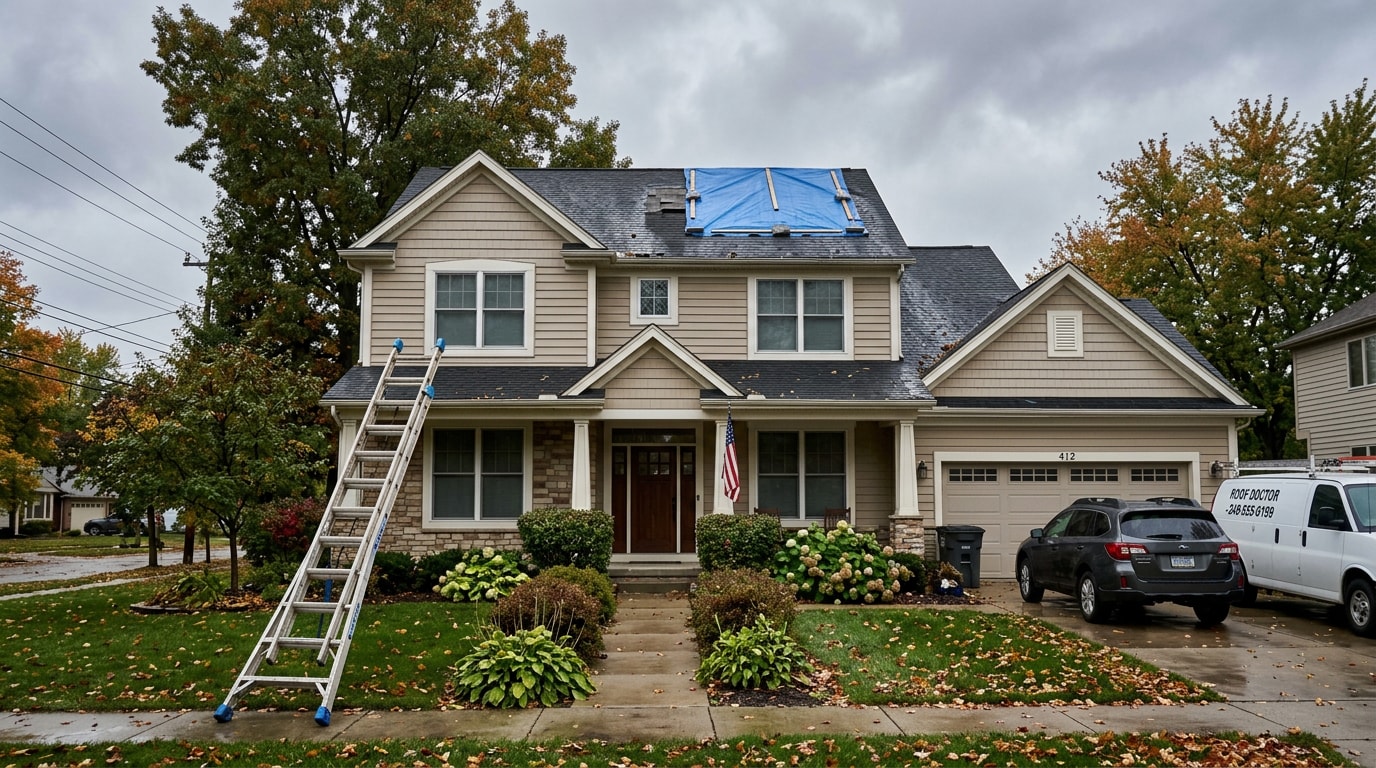
Oriental rug water damage restoration in Saginaw County starts with what you do in the first 60 minutes, not what a professional does days later. A burst pipe, an overflowing washer, or a sump failure can soak a hand-knotted wool or silk rug fast, and the wrong move, folding it, blasting it with a space heater, waiting too long, can turn a repairable rug into a total loss. Here's the exact sequence that separates a saved heirloom from a ruined one.
What Should You Do First When a Water-Damaged Oriental Rug Needs Repair?
The first hour after discovering a soaked rug matters more than almost any step that follows. Acting fast and acting correctly, not just acting fast, gives a wool or silk Oriental rug its best shot at full recovery.
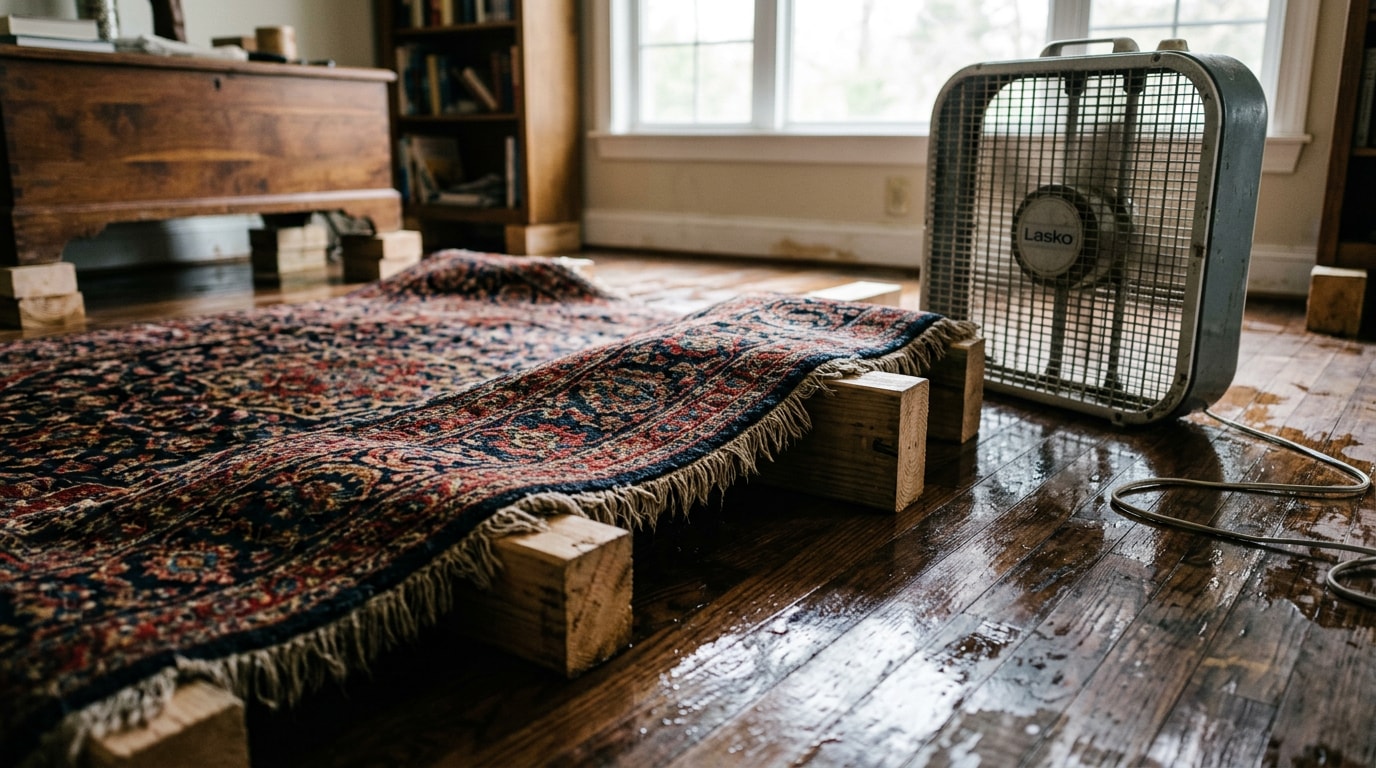
Immediate stabilization steps (blotting, elevation, airflow)
- Stop the water source first, then lift the rug off the wet flooring as soon as it's safe to move.
- Blot the surface with white towels instead of rubbing; rubbing drives moisture and dye deeper into the pile.
- Elevate one or more corners on clean, dry blocks so gentle, room-temperature airflow can start moving underneath.
- Never fold a wet Oriental rug. Folding traps moisture against the fibers and can set permanent creases or dye transfer.
- Avoid direct heat sources like space heaters or hair dryers. Wool and silk fibers respond better to slow, even drying than to a fast heat blast.
This is triage, not a finished fix.
Safe steps before professionals arrive
- Turn off electricity to the affected area if standing water is anywhere near outlets or wiring.
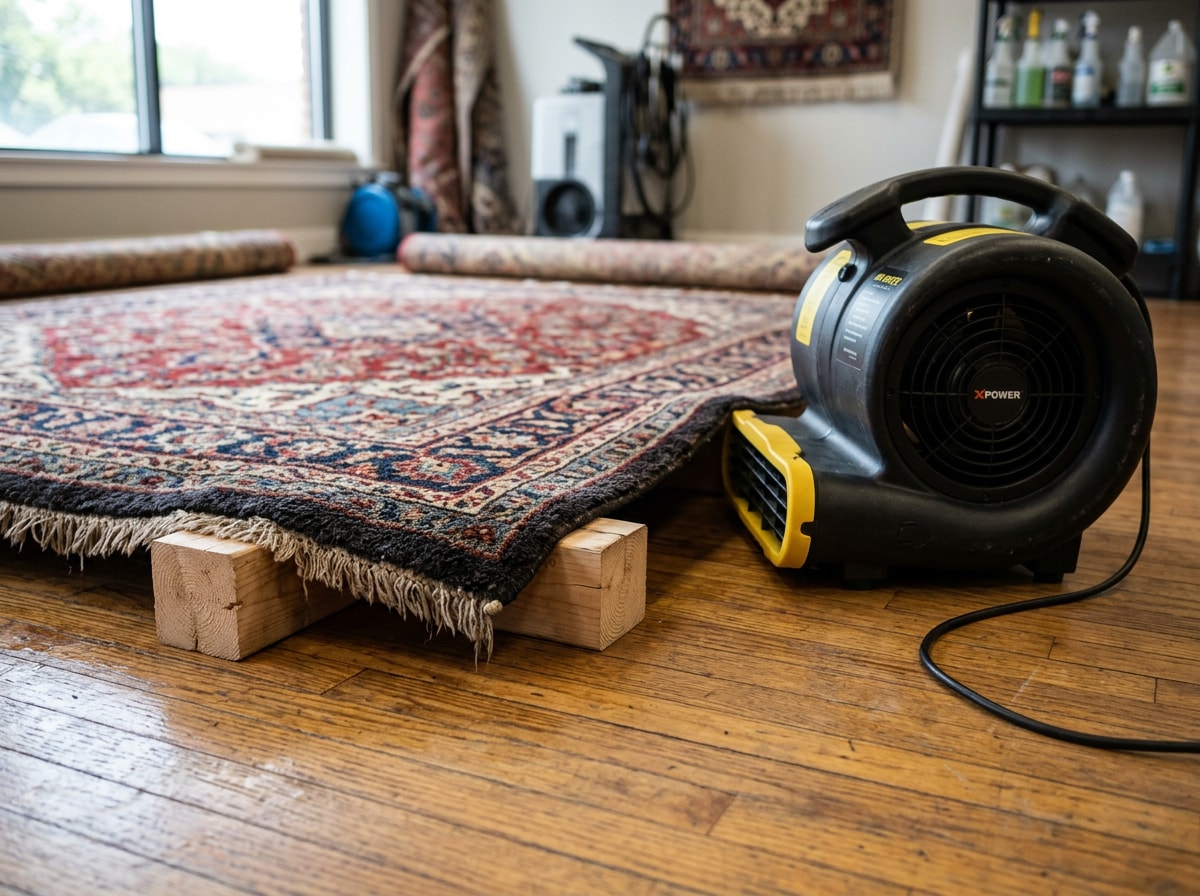
- Slide plastic sheeting or dry towels under a lifted rug to stop moisture from wicking back up from the subfloor or pad.
- Position fans and a dehumidifier for cross-airflow across the rug's surface rather than aiming them straight down at one spot.
These steps buy time and limit further damage, but they're stopgaps. If the loss involves more than a small spill, it's worth a call sooner rather than later. Get a free estimate from our Saginaw County team before moisture has a chance to set in permanently, and see how we serve homes throughout the Saginaw County area.
Water Categories and Why They Matter
Not all water is the same, and the category of water involved changes what's possible for your rug. Category 1 water originates from a sanitary source and poses no substantial risk from dermal, ingestion, or inhalation exposure, with typical sources including a broken supply line, an overflowing sink, or rainwater that hasn't contacted contaminants.
Category 2, or "gray water," contains a significant degree of chemical, biological, or physical contamination and can cause discomfort or illness on contact, with common sources including washing machine and dishwasher discharge.
Water doesn't stay in one category forever. Category 1 water left standing 24 to 48 hours can develop microbial growth and reclassify to Category 2, and Category 2 water can reach Category 3 in a similar window. The restoration industry uses a standardized reference for this classification system. The standard describes the procedures to be followed and the precautions to be taken when performing water damage restoration in residential, commercial, and institutional buildings, and the systems and personal property contained within those structures, as laid out by the IICRC S500 Standard. A rug soaked by a clean supply line has a meaningfully better outlook than one exposed to contaminated water from a sewer backup or storm flooding, and that outlook gets worse the longer the rug sits.
Why Water-Damaged Rugs Need Professional Cleaning
Towels, fans, and a dehumidifier only address moisture sitting on the surface. Bacteria, mold spores, and trapped soil can persist deep inside wool or silk fibers long after a rug feels dry to the touch.
Unless the water source is confirmed completely clean, assume contamination is possible and treat the situation accordingly. This is the real DIY-versus-professional decision point: home drying can mask a problem instead of solving it, while deep extraction reaches the foundation and backing where bacteria tend to hide. If the water came from a basement flood rather than a rug accident alone, the cleanup playbook looks a lot like what we outline in our flood clean up guide for Genesee County homeowners, where the same 24-to-48-hour window drives every decision.
How Do Experts Handle Oriental Rug Repair After Water Exposure?
Professional restoration follows a sequence: inspection, controlled extraction, structured drying, a cleansing rinse, blocking the rug back to true shape, and finally fiber and color restoration. Each step addresses something home drying methods typically miss.
The length of time a rug sits wet makes a real difference in outcome:
| Factor | Soaked under 24 hours | Soaked 48+ hours |
|---|---|---|
| Mold risk | Low to moderate | High |
| Dye bleed | Minimal if dried properly | Likely, especially on dark reds/blues |
| Fiber integrity | Generally intact | Foundation threads may weaken |
| Restoration outcome | Often fully recoverable | May need partial fringe/fiber repair |
Safe drying protocols that protect dyes and wool fibers
Technicians typically run a colorfastness test with a damp white cloth pressed against the dyed pile before any wet cleaning begins. If color transfers to the cloth, drying and cleaning methods shift immediately to prevent dye bleed. Rugs then dry on a breathable surface under cross-airflow, never downward airflow or applied heat, since wool needs steady, moderate conditions to avoid shrinkage or fiber distortion.
Professional techniques (rinsing, blocking, re-fringing)
A clean, cool rinse removes minerals, silt, and residual contaminants that towels and fans can't touch. The rug is then blocked back to square while still damp, correcting any warping from uneven drying. Re-fringing replaces weak or missing fringe to match the original weave, and fiber restoration work can revive crushed pile and faded color where the foundation is still sound.
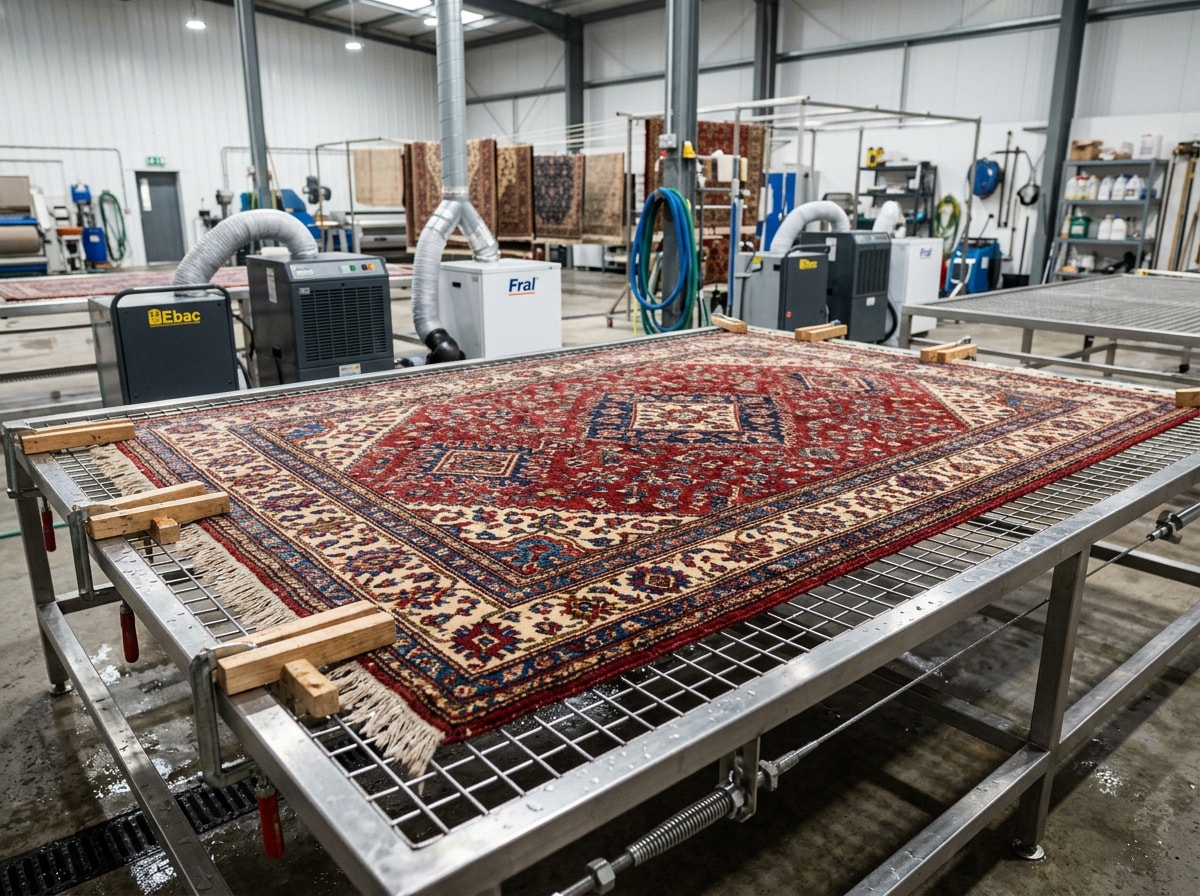
This blocking and fiber-restoration stage is often what separates a fully saved heirloom rug from one that's only partially recoverable.
Which Risks Develop Fastest, and How Fast?
Mold and mildew develop fastest in damp, warm conditions. It is important to dry water-damaged areas and items within 24-48 hours to prevent mold growth. Dye bleed can appear within hours if a rug sits in standing water, especially with deep reds and indigos. Structural damage, foundation rot in the backing and warp threads, tends to build over several days as trapped moisture keeps weakening fibers.
The mold risk isn't just cosmetic. Molds can also cause asthma attacks in people with asthma who are allergic to mold, and mold exposure can irritate the eyes, skin, nose, throat, and lungs. That health angle, combined with how quickly dye and structural damage compound, is exactly why speed matters more than any single cleaning technique.
When a Roof, Siding, or Gutter Problem Is the Real Source
Rug cleaners can dry and restore the textile, but they can't tell you why your basement or living room flooded in the first place, and that's the gap we fill. In our inspections across Saginaw County after spring thaw and summer storms, the rugs that came through worst weren't damaged by a one-time spill. They were damaged by a slow leak from storm-damaged flashing, a clogged gutter overflowing against the foundation, or siding that let wind-driven rain behind the wall for weeks before anyone noticed a stain on the floor.
If your rug got wet because of a structural problem rather than a plumbing accident, fixing the source matters as much as drying the rug:
- A damaged roof section lets water in every time it rains. Storm damage roof repair stops the recurring source.
- Failing or detached siding lets wind-driven rain behind exterior walls. Storm damage siding repair addresses that entry point.
- Clogged or sagging gutters push water toward the foundation instead of away from it. Storm damage gutter repair redirects it where it belongs.
If the damage came from a covered storm event, our insurance claim roof assistance team can help document the loss alongside your rug restoration claim, since adjusters often want both addressed in the same file.
FAQ
Can water-damaged rugs and carpets actually be saved?
Most water-damaged rugs can be saved if restoration begins within the first 48 hours. Oriental and Persian rugs, thanks to their dense wool or silk construction, often have a higher recovery rate than synthetic carpet when handled promptly and correctly.
Can you restore valuable Oriental and Persian rugs?
Yes. Valuable Oriental and Persian rugs are routinely restored after water exposure. What separates specialized rug restoration from general carpet cleaning is knowledge of hand-knotted construction, natural dyes, and fiber-specific drying needs that generic equipment isn't built for.
Should I roll or fold a wet rug to move it?
No. Never roll or fold a wet rug. Doing so traps moisture against the fibers and can set permanent creases, dye transfer, or mildew in the fold lines. Keep it flat and elevated until it can be properly dried.
How long does it take for mold to grow on a wet rug?
Mold can begin developing within roughly 24 to 48 hours in warm, humid conditions. It is important to dry water-damaged areas and items within 24-48 hours to prevent mold growth. That narrow window is the main reason same-day response matters more than which cleaning product gets used.
How long does professional rug water damage restoration take?
Most jobs run anywhere from a few days to about two weeks, depending on how saturated the rug was, whether contamination is present, and how much fiber or fringe work is needed. A clean-water rug caught within hours typically moves through the process faster than one that sat for days.
Does homeowners insurance cover water-damaged rugs?
It depends on the water source. Flood damage is excluded under standard homeowners and renters insurance policies. Sudden, accidental events like a burst pipe are typically covered under a standard policy, but flood coverage is available as a separate policy from the National Flood Insurance Program (NFIP), administered by FEMA, and from many private insurers. Confirm specifics directly with your insurer or agent before assuming a loss is covered.
Conclusion
Saving a water-damaged Oriental rug comes down to a calm, correct sequence: stabilize it, guide airflow properly, test for colorfastness, reshape it while damp, and finish with careful fringe and fiber work. Skipping or rushing any step is usually what turns a repairable rug into a lost one. And if a roofing, siding, or gutter failure caused the leak, fixing that source is just as important as the rug itself, or you'll be having this same conversation again next storm season.
If you're dealing with a soaked Oriental or Persian rug, or the storm damage that caused it, anywhere in Saginaw County, a professional assessment beats guesswork. Visit our homepage to see our full range of storm damage services, or request a free estimate today.
About the Author
This guide was prepared by the Hailstorm Pros content team, Michigan-based storm damage restoration specialists who work directly with homeowners across Saginaw County on roofing, siding, gutter, and water-intrusion repairs after severe weather. Questions about a specific loss? Contact our team for a direct answer.