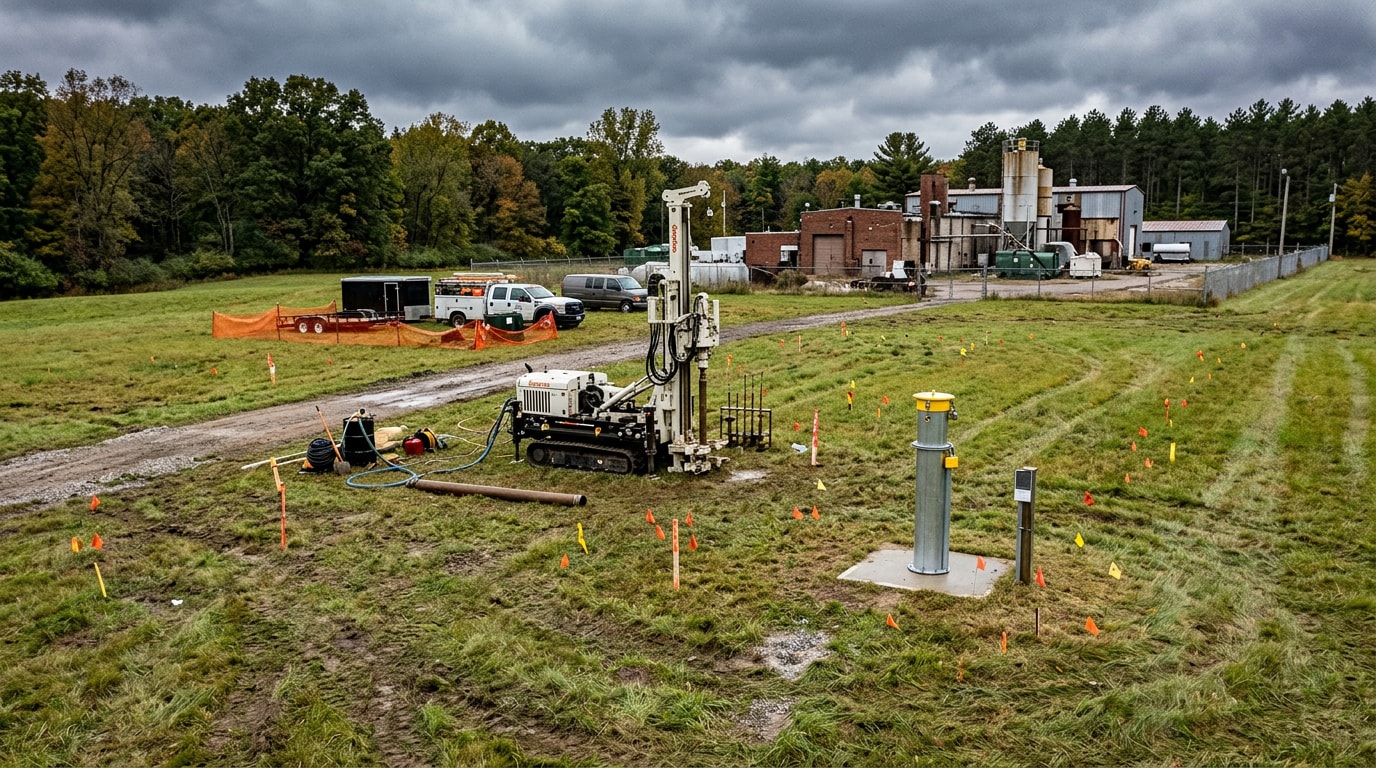
Environmental remediation consultants in Livingston County step in the moment contamination shows up on a soil boring log, a Phase II report, or a leaking tank inspection. They run the testing, design the cleanup, and carry the paperwork to EGLE so a property owner isn't guessing at compliance. Here's what that work actually looks like on the ground, including a real contamination case just outside Howell.
Environmental Remediation Services in Livingston County
Local firms typically bundle three pillars under one roof: testing, active remediation, and storage tank work. Whether you're closing a real estate deal or responding to a known release, one team usually handles the file from discovery to closure.
Environmental Testing
Testing almost always comes first, because you can't design a cleanup around a guess. Common testing types include:
- Soil testing — identifies contaminant type and depth
- Groundwater testing — tracks plume direction and concentration
- PFAS testing — screens for per- and polyfluoroalkyl compounds
- Air quality and asbestos testing — addresses risks inside existing structures
Property owners usually need this during a real estate transaction, after a spill, or as a required follow-up once a Phase II Environmental Site Assessment flags a concern.
Remediation
Once testing confirms contamination, remediation turns findings into action:
- Soil remediation and groundwater remediation address the two most common pathways
- PFAS remediation has become its own specialized discipline given how persistent these compounds are
- Contaminated soil removal works well for smaller, well-defined releases but isn't always cost-effective at scale
- Vapor barriers and site dewatering support cleanup where excavation alone won't solve the problem
Storage Tank Services
Livingston County's mix of older gas stations, farms, and light industrial properties means underground storage tanks (USTs) turn up constantly. Work typically starts with confirming whether a tank is active, abandoned, or leaking. If a leak is confirmed, LUST closure involves documented cleanup and regulatory sign-off before a property can be considered clear. You can see how this plays out across our Livingston County service area.
A Local Case: PFAS at the Livingston County Landfill
Most service pages talk about PFAS in the abstract. Livingston County actually has a documented case worth knowing.
Livingston County Landfill is a closed Type 2 municipal solid waste landfill, located on Barron Road, operated by the Livingston County Board of Public Works (LCBPW) from 1972 until its closure in 1989.
In the late 1980s volatile organic compounds (VOCs) were detected in residential drinking water and traced back to the landfill.
The file didn't end there. Due to historical groundwater contamination, EGLE requested Livingston County sample select monitor wells for PFAS analysis in April 2019, and a sampling event that May discovered PFAS levels in one monitoring well exceeding EGLE's Part 201 criteria that went into effect in August 2020.
The concentration of PFOA was 9 ppt and non-detect for PFOS.
That's the kind of file a consultant inherits: decades-old contamination, a regulatory threshold that changed years after the original release, and a county agency now managing ongoing monitoring. It's also why "we'll test and see" isn't really a strategy in this county — closed landfills and legacy industrial sites keep resurfacing on new criteria. Full details are public on EGLE's Livingston County Landfill case page.
How the Remediation Process Actually Works
Not every contaminated site needs full remediation. Sometimes ongoing monitoring is enough, depending on contaminant levels, exposure risk, and state thresholds. But when action is required, the sequence is fairly consistent:
- Site characterization — mapping the extent of contamination
- Feasibility study — comparing cleanup technologies against cost and site conditions
- Remedial design — engineering the chosen solution
- Implementation — the actual cleanup work
- Closure — EGLE issues a "no further action" determination once goals are met
A wide variety of characterization, monitoring, and remediation technologies are used through the cleanup process. Timelines swing from several months to several years depending on contaminant type and site complexity. For the federal framework these state programs often mirror, see EPA's overview of the Superfund cleanup process.
Specialized Environmental Consulting Services
Beyond testing and basic cleanup, most Livingston County projects eventually touch one of these disciplines.
Soil and Groundwater Remediation Design & Oversight
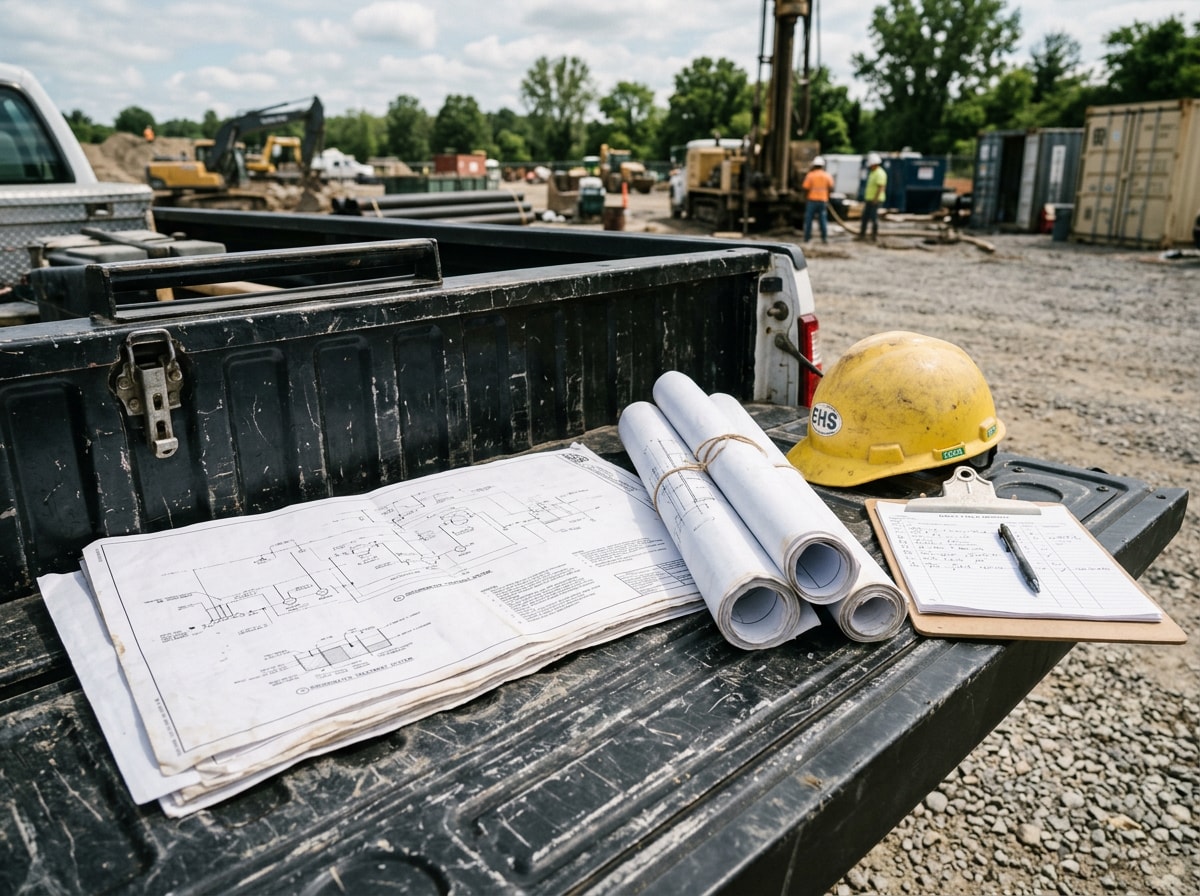
Design starts with a feasibility study, then moves into system design, installation, and long-term operation.
| Method | Speed | Best Fit |
|---|---|---|
| Excavation & disposal | Fastest | Small, well-defined soil contamination |
| In-situ chemical oxidation | Moderate | Specific contaminant classes, limited site access |
| Pump-and-treat | Slowest | Large groundwater plumes |
Pump-and-treat tends to run longer and cost more over time but works reliably on large plumes. In-situ oxidation treats contamination in place, often cutting timelines, though it's less effective on mixed plumes.
PFAS Sampling, Monitoring & Mitigation Planning
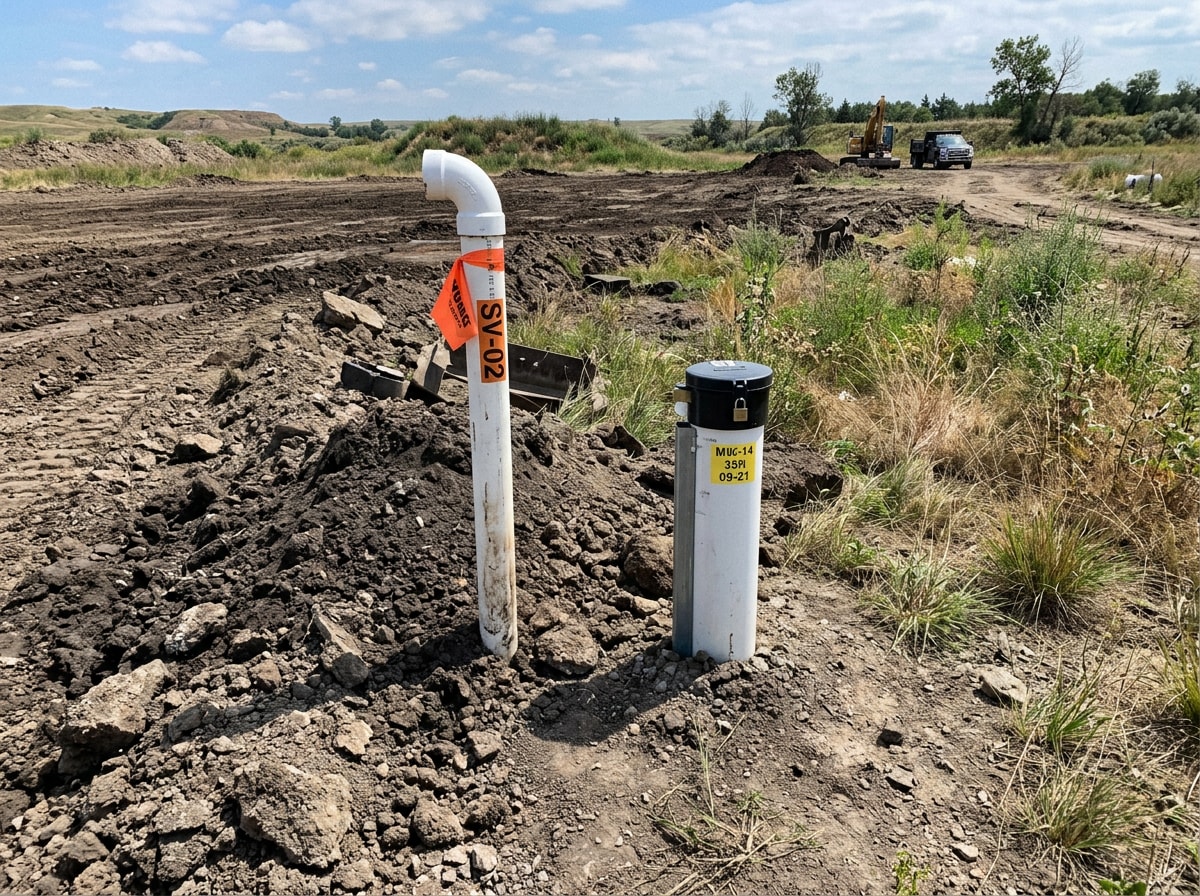
PFAS testing identifies which compounds are present and at what concentration, while ongoing monitoring tracks whether levels are changing. A mitigation plan typically includes source identification, groundwater monitoring wells, and treatment options matched to the compounds detected — the Livingston County Landfill case above is a working example of exactly this kind of monitoring in practice.
Vapor Intrusion & Soil Gas Assessments
Volatile chemicals in soil or groundwater can migrate upward and enter buildings through cracks, utility lines, and foundation gaps. A vapor intrusion assessment combines soil gas sampling with indoor air testing to confirm whether vapors are reaching occupied space. When confirmed, sub-slab depressurization systems vent vapors before they reach indoor air, without requiring full remediation of the underlying contamination.
Due Care Evaluations & Documentation
Michigan property owners who knowingly purchase or operate on contaminated property take on due care obligations under Part 201. Due care covers the obligations that owners and operators of contaminated properties are required to take, to ensure that the contamination does not cause unacceptable exposures and assure the safe use of the property. A due care plan documents existing contamination, outlines steps to prevent exposure, and establishes protocols for managing soil or groundwater disturbed during future construction. See EGLE's Due Care program page for the full requirements.
Hazardous Materials Surveys & Asbestos Inspections
Renovation and demolition projects almost always require a hazardous materials survey beforehand, particularly on older Livingston County buildings. An asbestos inspection identifies where asbestos-containing materials are present and whether they pose a disturbance risk. OSHA's Asbestos Standard for the Construction Industry, 29 CFR 1926.1101, governs inspection, exposure limits, and worker protection during this work. Hazmat management extends beyond asbestos to lead paint, PCBs, and other regulated materials requiring special handling.
Industrial Stormwater & Wastewater Permitting
Industrial sites that discharge stormwater runoff typically need an NPDES permit under the Clean Water Act. A consultant helps prepare the stormwater pollution prevention plan, identify monitoring points, and track permit renewal deadlines. Permit violations can carry real fines and, in repeat cases, operational shutdowns until compliance is restored.
Chemical In-Situ Treatment vs. Bioremediation
Two in-place treatment methods come up often enough to compare directly:
| Factor | Chemical In-Situ Oxidation | Bioremediation |
|---|---|---|
| How it works | Injects oxidants/reagents into soil or groundwater | Relies on microorganisms to break down contaminants |
| Best suited for | Sites where excavation is disruptive or impossible | Petroleum hydrocarbons, certain organics |
| Typical timeline | Weeks to a few months | Months to longer |
| Site disruption | Low to moderate | Minimal |
| Limiting factors | Depth, soil permeability, contaminant mix | Oxygen levels, soil conditions, contaminant type |
Neither is universal. A consultant evaluates depth, permeability, and contaminant mix before recommending one over the other — and sometimes the two get paired on the same site.
Choosing an Environmental Remediation Consultant in Livingston County
A few things worth checking before you sign a scope of work:
- Do they have direct experience with EGLE Part 201 and Part 213 filings, not just general environmental science background?
- Can they point to a comparable local project (landfill, UST, or brownfield) rather than only out-of-state work?
- Will they walk you through the feasibility study results before locking in a remediation method?
- Do they handle due care documentation in-house, or will that get outsourced and add time?
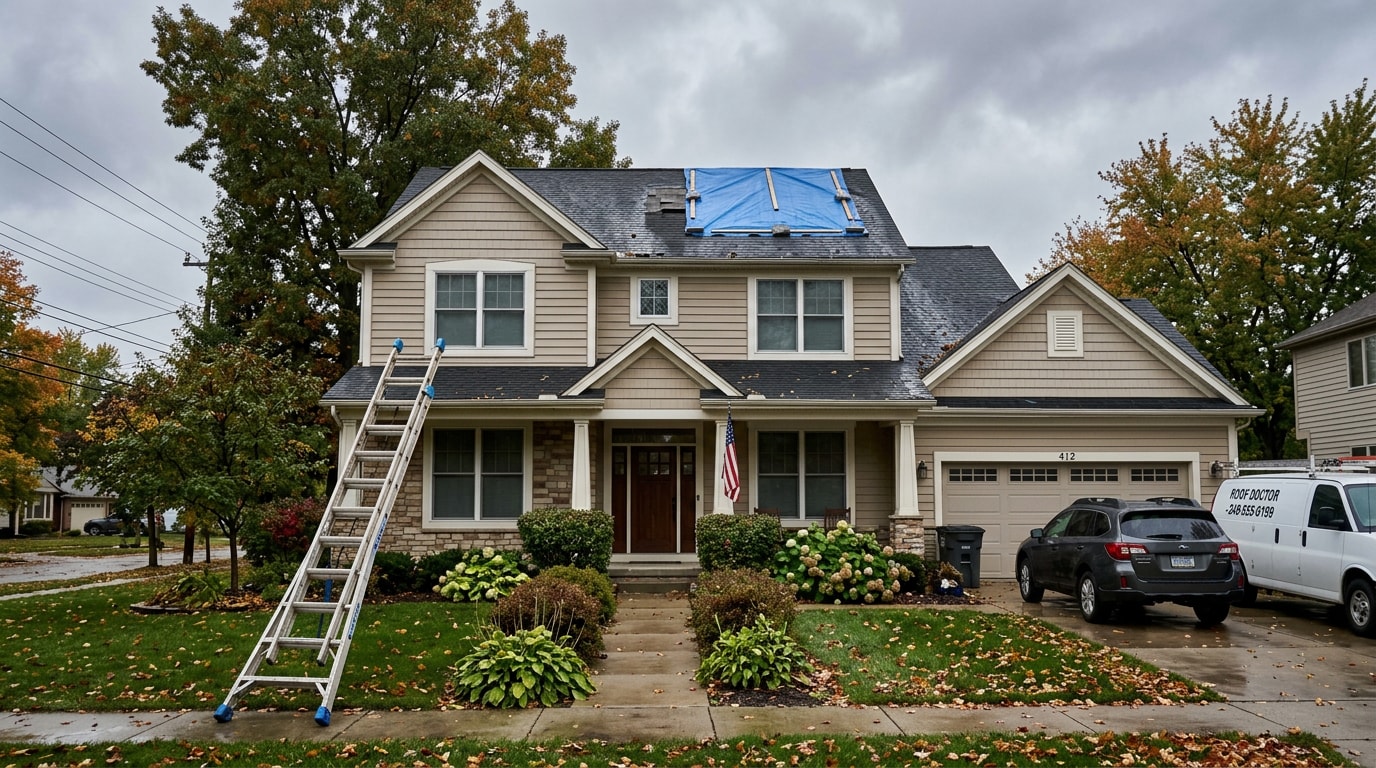
If a contamination issue overlaps with active water intrusion or storm-related damage to a structure, that's a separate but related problem. Our guide on water damage mitigation in Livingston County covers what to do when moisture is actively compromising a building, and if storm damage has left a roof or siding exposed while remediation work is underway, get a free estimate so the structure itself isn't adding to the problem.
You can also browse our full coverage area from the homepage to see which Michigan counties we serve alongside Livingston.
FAQ
What does an environmental remediation consultant actually do?
They test soil, groundwater, or air for contamination, design a cleanup approach matched to the contaminant and site conditions, manage the active remediation, and handle the regulatory documentation EGLE requires to close the file.
How much does soil or groundwater remediation cost in Michigan?
There's no reliable statewide average because cost depends on contaminant type, plume size, treatment method, and how long monitoring has to continue. A feasibility study is the step that produces a real site-specific estimate.
What is Part 201 and why does it matter?
Part 201 is the Environmental Remediation section of Michigan's Natural Resources and Environmental Protection Act. It requires owners and operators to take measures ensuring that existing contamination on a property does not cause unacceptable risks and is not exacerbated.
How long does environmental remediation take?
Anywhere from several months to several years. Smaller, well-defined soil releases close faster; groundwater plumes and PFAS sites, like the one tracked at the Livingston County Landfill, can require monitoring for years after active treatment ends.
Do I need a Phase II ESA before buying property in Livingston County?
If a Phase I assessment flags a recognized environmental condition, a Phase II is the standard next step. It involves actual soil and groundwater sampling to confirm whether contamination is present.
Is PFAS a real concern in Livingston County?
Yes. EGLE has actively monitored PFAS levels at the Livingston County Landfill in Howell since 2019 after groundwater contamination history there, and testing has detected PFOA above current Part 201 criteria in at least one monitoring well.
What's the difference between remediation and due care?
Remediation is the active cleanup of contamination. Due care obligations are separate from liability for the contaminants and apply to both non-liable and liable parties — it's about managing exposure risk on a property, with or without full cleanup underway.