
A roof can go from intact to open in the time it takes a thunderstorm to cross Oakland County. Missing shingles after a microburst, a tree limb through the deck, or a blown-off ridge cap all create the same immediate problem: water now has a path into the house. Permanent repairs cannot always start at 10 p.m. Tarping can.
800 New Look provides 24/7 emergency tarping across Oakland County and Southeast Michigan so you can stop the next rain band from finishing the job the storm started. This guide explains when tarping is needed, how it protects the structure and the insurance file, what a night call actually looks like, and what you should not do on the roof yourself. When the temporary cover is in place, the next steps are Storm Damage Roof Repair and, for smaller openings after the emergency, Roof Repair.
When emergency tarping is needed
Not every missing shingle is a tarp job. A single tab on a sunny forecast can wait for a morning inspection. Tarping is the right call when the roof is no longer a continuous water-shedding surface, or when the deck itself is compromised.
Common triggers:
- A section of shingles torn off down to the felt or the bare deck
- A fallen limb or tree that has cracked or punctured the sheathing
- A hole from a thrown branch, trampoline, or neighbor’s debris
- A lifted or missing ridge that is dumping water into the attic
- Flashing torn away at a chimney, wall, or skylight
- A structural sag that suggests the deck is no longer sound
- Active leaking into a living space, light fixture, or wall cavity
Michigan weather makes the timing worse. A storm that opens the roof is often followed by more rain the same night or the next morning. Waiting for a weekday crew while the house takes a second soaking is how drywall, insulation, and flooring get added to a claim that started as a roof opening.
If you can see sky from the attic, if water is dripping into a room, or if a tree is sitting on the house, treat it as an emergency even if the power is still on and the rest of the block looks normal.
How tarping protects the home while repairs are arranged
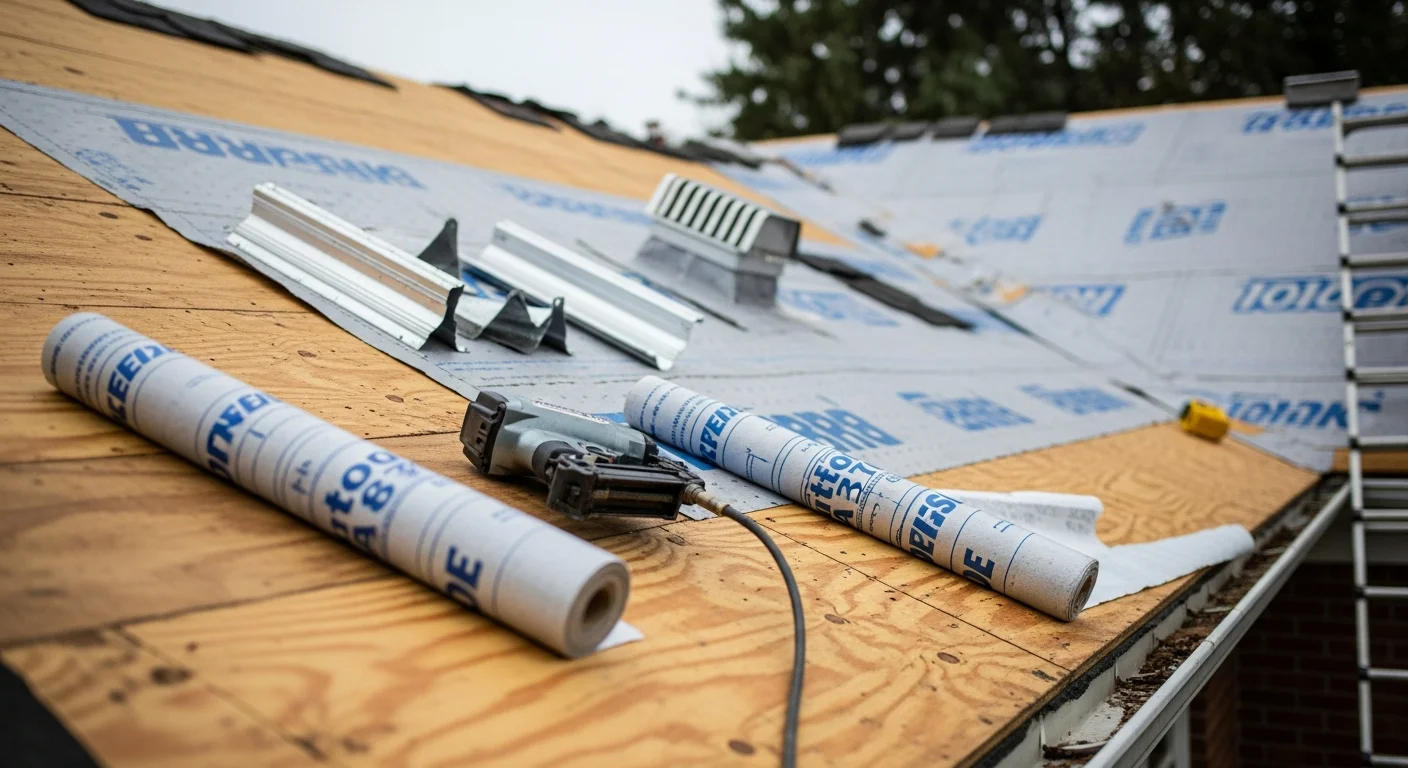
A proper tarp is a temporary roof, not a blue blanket tossed over the ridge. The goal is to shed water past the damaged area and off the eaves so it never reaches the attic.
That means the cover has to extend well beyond the opening, be secured so wind cannot sail it, and be detailed at edges so water does not run underneath. On a steep Oakland County colonial, that is ladder work, harness work, and fastening into sound decking outside the damaged zone. On a ranch, it can still take a crew to get a large tarp over a limb hole without making the opening worse.
While the tarp is up, you buy time. An adjuster can be scheduled. Materials can be ordered. A tree service can remove a limb that is still on the roof. Interior drying can start without a new rain event undoing it. The tarp does not fix the deck. It stops the loss from growing every time the radar lights up.
If insulation is wet, tarping the exterior is only half of mitigation. Move belongings, put buckets under active drips, and tell the crew where water showed up inside. That interior map helps us place the cover over the real opening, which is not always directly above the stain. Water travels along rafters and truss chords before it finds a light fixture.
Why proper tarping matters for the insurance claim
Homeowners policies expect you to prevent further damage. That duty to mitigate is not a technicality. If you leave a hole open through two more storms, a carrier can argue that the soaked drywall, the swollen flooring, and the mold on the attic sheathing are on you, not on the original wind or tree event.
A professional tarp does two things for the file. It stops that argument, and it creates a dated record that you acted. We photograph the opening before the cover goes on, the cover after it is secured, and the interior stains. Those photos become part of the claim alongside the later repair estimate.
A poor tarp can hurt you. Nailing a small tarp only at the corners, covering the wrong slope, or driving fasteners through undamaged shingles in a way that creates new leaks gives the adjuster extra questions. So does a tarp that blows off overnight because it was not anchored. Emergency work should look like emergency work done by people who roof for a living, not like a weekend experiment.
Keep the invoices and the photos. Tarping is typically claimed as part of the same weather loss. You want a paper trail that matches the date of the storm.
What to expect from a 24/7 emergency call
When you call 800 New Look after hours, you are not leaving a voicemail that waits for Monday. The goal of the first conversation is simple: Is the roof open, is anyone unsafe, and can we get a crew to you tonight?
Expect questions about the address, the type of damage, whether a tree is still on the structure, whether wires are down, and where water is entering. If the site is not safe because of live power lines or a shifting tree, we will tell you to keep people out of that part of the house and coordinate with the utility or a tree service before anyone climbs.
A typical night response looks like this:
- Confirm the address and a safe meeting point in the driveway
- Arrive with lights, ladders, tarps, and fastening materials
- Assess from the ground, then from the roof if it is stable
- Photograph the damage
- Install a cover that sheds water beyond the opening
- Check the attic or the wet rooms with you
- Leave you with a clear next step for the claim and the permanent repair
You do not need to have the insurance claim open before we tarp. Mitigation comes first. We can help you start the claim in the morning with documentation already in hand.
How 800 New Look deploys tarping crews
We are based in Farmington Hills and run emergency tarping across Oakland County and the surrounding Southeast Michigan counties we already serve for roofing. After a widespread event, calls stack up. We prioritize openings over cosmetic shingle loss, and active interior leaking over a dry attic with a few missing tabs.
Crews carry more than one size of cover because a chimney flashing failure and a twenty-foot limb hole are not the same job. They also carry the judgment to say when a roof should not be walked. A spongy deck around a puncture is a reason to work from sound framing, not a reason to stand in the hole.
Once the tarp is on, we schedule the inspection that turns an emergency into a scoped repair. That is where Storm Damage Roof Repair takes over if the loss is storm-driven, or Roof Repair if the opening is smaller and the rest of the system is sound. The tarp stays until the permanent work can start, and we will re-secure it if another storm tries to take it off.
What not to do
Do not go on the roof yourself. Wet asphalt is slick. A dark roof at 10 p.m. hides missing deck. A limb that looks stable can roll. The cheapest extra damage after a storm is a fall. From the ground you can put buckets out, move furniture, shut off a fixture that is dripping, and take photos of the interior. That is useful. Climbing is not.
Do not wait to see if it rains again. The National Weather Service does not schedule its next cell around your weekday. If the deck is open, cover it.
Do not use a painter’s drop cloth or a shower curtain. Those materials tear, hold water, and blow off. A roofing tarp is sized and finished for weather.
Do not pull a tree off the roof with a pickup and a chain. You can open the hole, roll the tree into a window, or pull the fascia off. Tree removal from a structure is its own trade. We tarp around a limb when it is safer to leave it until a tree crew arrives.
Do not throw away broken shingles or the piece of deck that came down with the limb until they are photographed. They are evidence.
Do not tell the carrier you “already fixed it” if all you did was throw plastic on the ridge. Say it was emergency mitigation and that a contractor documented the opening.
How tarping cost is typically covered
Emergency tarping after a covered storm or fallen-tree loss is usually part of the claim, not a separate luxury. It is mitigation. Insurers expect it. The bill is documented as reasonable cost to prevent further damage.
That does not mean every carrier pays every number without review. A clear invoice, photos of the hole, and a tarp that is actually on the roof make the conversation short. A vague cash receipt for “emergency service” with no photos makes it long.
If your deductible applies to the overall loss, it still applies. Tarping does not create a second deductible in a normal homeowners claim, but it also does not waive the one you already have. We will explain what we charged and how it should appear in the estimate so you are not surprised when the first check arrives.
Keep in mind that tarping is temporary. The claim should also include the permanent repair or replacement. A carrier that pays for a tarp and then delays the roof work is leaving you in a holding pattern. We stay on that file until the cover comes off because new materials are on, not because everyone got tired of looking at blue.
Monroe County tornado warning, July 2023
In July 2023, a tornado warning covered Monroe County after a line of storms crossed the western Lake Erie shore. One homeowner near Monroe heard the crack before they understood it. A limb from a backyard maple had come down across the rear slope, punched the deck, and left a hole you could see from the hallway when the next flash of lightning hit. Ceiling paint started to bubble over the kitchen. It was about 10 p.m.
They called 800 New Look instead of climbing out a bedroom window with a flashlight. We asked whether the limb was still moving, whether wires were involved, and where the water was landing. The site was otherwise safe. A crew met them in the driveway, photographed the puncture from the attic side and from the roof, and built a cover that ran past the broken sheathing and over the ridge so the next band of rain shed into the gutters instead of the kitchen.
The next morning the house was damp where the first surge had come in, but it was not raining into the cabinets. That sequence — night tarp, morning documentation, then a scoped repair — is the difference between a roof claim and a roof-plus-kitchen claim. The same July 2023 warning marked other Monroe County streets with missing shingles that could wait until daylight. The punctured deck could not.
If you are on one of those streets and you can see daylight through the sheathing, treat the hour on the clock as irrelevant. Call.
After the tarp is on
Stay out of rooms with wet ceilings if the drywall is sagging. Turn off circuits that are dripping. Call your insurer and tell them mitigation is already underway. Then let the permanent repair be a planned job instead of another emergency.
800 New Look will not leave you with a tarp and a shrug. We will tell you whether you are heading toward a targeted repair or a larger storm restoration, and we will help you put that in front of the adjuster with the photos from the night the roof opened.
Get a free inspection
If your roof is open, or if you are not sure whether the damage can wait until morning, get a crew on site. Emergency tarping protects the house tonight. A documented inspection sets up the claim and the repair that follow.