
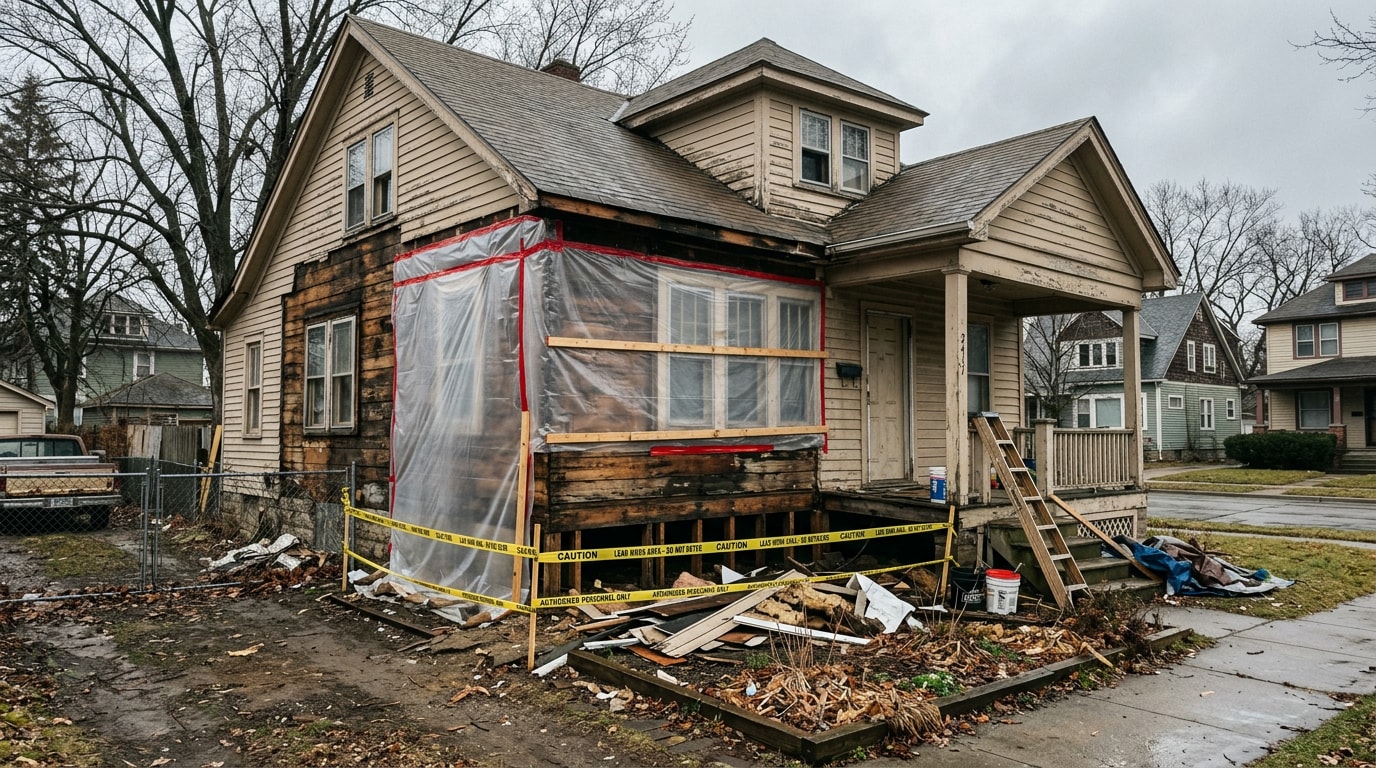
Abatement contractors in Wayne County deal with one of the biggest hidden risks in the region's older housing stock: asbestos and lead-based materials buried in homes built before 1980. Hiring a licensed crew isn't a nice-to-have here, it's a safety requirement, and in most renovation or demolition projects, a legal one too. This guide breaks down what a qualified contractor should do, what the process looks like, what it tends to cost, and what happens when abatement overlaps with a roof or siding replacement.
Why You Need a Professional Asbestos & Lead Abatement Contractor
Disturbing asbestos or lead-based materials without proper training doesn't just risk your health. It can spread contamination to parts of the home that were previously safe.
A licensed abatement contractor carries the training, containment equipment, and state accreditation required to handle the work legally and safely. The federal guidance on this is consistent: asbestos-containing materials that aren't damaged or disturbed are not likely to pose a health risk, but removal may be required when remodeling or making major changes to your home will disturb asbestos-containing material. That's exactly the situation most Wayne County renovation projects create.
The health stakes are real, and the compliance stakes matter too. Improper removal can trigger fines or derail a real estate sale during inspection. DIY asbestos removal carries risk that almost never pays off compared to hiring it out correctly the first time.
| DIY Removal Risk | Licensed Contractor Process | |
|---|---|---|
| Containment | Often none; fibers spread through HVAC and foot traffic | Sealed containment with negative air pressure |
| Disposal | Frequently illegal or untracked | Documented, regulation-compliant disposal |
| Health exposure | High, unmonitored | Minimized with PPE and HEPA filtration |
| Legal/resale impact | Can void inspections, trigger fines | Passes clearance testing, protects resale value |
Why Contractor Experience and Certification Matter
Look for a contractor whose track record spans testing, containment, safe removal, disposal, and post-project clearance testing, not just removal alone. A contractor that's licensed and insured, with certified technicians and real years of experience, should also work with you to limit disruption to your household while staying fully compliant with state and federal rules.
Local Asbestos & Lead Abatement Risk Factors in Wayne County, MI
Wayne County's age of construction is the core risk factor. Homes built before 1980 are far more likely to contain asbestos flooring, pipe insulation, or lead-based paint than newer builds. Detroit and the surrounding Downriver communities have a dense concentration of this older housing stock, which is why testing before any renovation matters so much here.
Common materials of concern in older homes include vinyl floor tile and mastic adhesive, wrapped pipe insulation, and lead paint on trim, walls, and exterior siding in homes built before 1978. Any renovation, demolition, or flooring removal project in pre-1980 construction should trigger testing before work begins, not after a problem is discovered.
Michigan's asbestos rules add a layer most homeowners never hear about until they're mid-project. The Air Quality Division of EGLE implements the National Emission Standards for Hazardous Air Pollutants program for asbestos in Michigan, which protects the public and environment by minimizing the release of asbestos fibers during renovation and demolition activities. The notification threshold is specific: EGLE requires notification at 260 linear feet or 160 square feet or 35 cubic feet or more of regulated material , a detail most hiring guides skip entirely but one that affects how your contractor schedules and documents the job. For neighborhood-specific guidance, see our Wayne County service area page.
How Abatement Fits Into a Roof or Siding Replacement Project
This is the part most abatement guides don't cover: asbestos and lead issues rarely show up on their own. They surface mid-project, usually when a roofing or siding crew opens up an older exterior wall or tears off aging shingles.
Across our own tear-off and storm-damage inspections in Wayne County neighborhoods like Dearborn, Redford, and River Rouge, we routinely flag older cement-asbestos siding panels and built-up roofing felt for lab testing before any replacement work starts. When a sample comes back positive, the abatement contractor handles removal and clearance testing first. Only after the site is cleared do we move forward with siding replacement, roof replacement, or new asphalt shingles installation.
If a storm already damaged the exterior and exposed older materials underneath, our storm damage restoration team can coordinate the sequencing, and our insurance claim siding assistance team can help you understand what your policy covers before abatement even starts. Once your property is cleared, get a free estimate for the exterior work that follows.
What a Qualified Abatement Contractor Should Offer
A qualified contractor should offer a full service line, not just removal. That starts with asbestos testing: sampling and lab analysis that confirms whether a material is actually hazardous before any work begins.
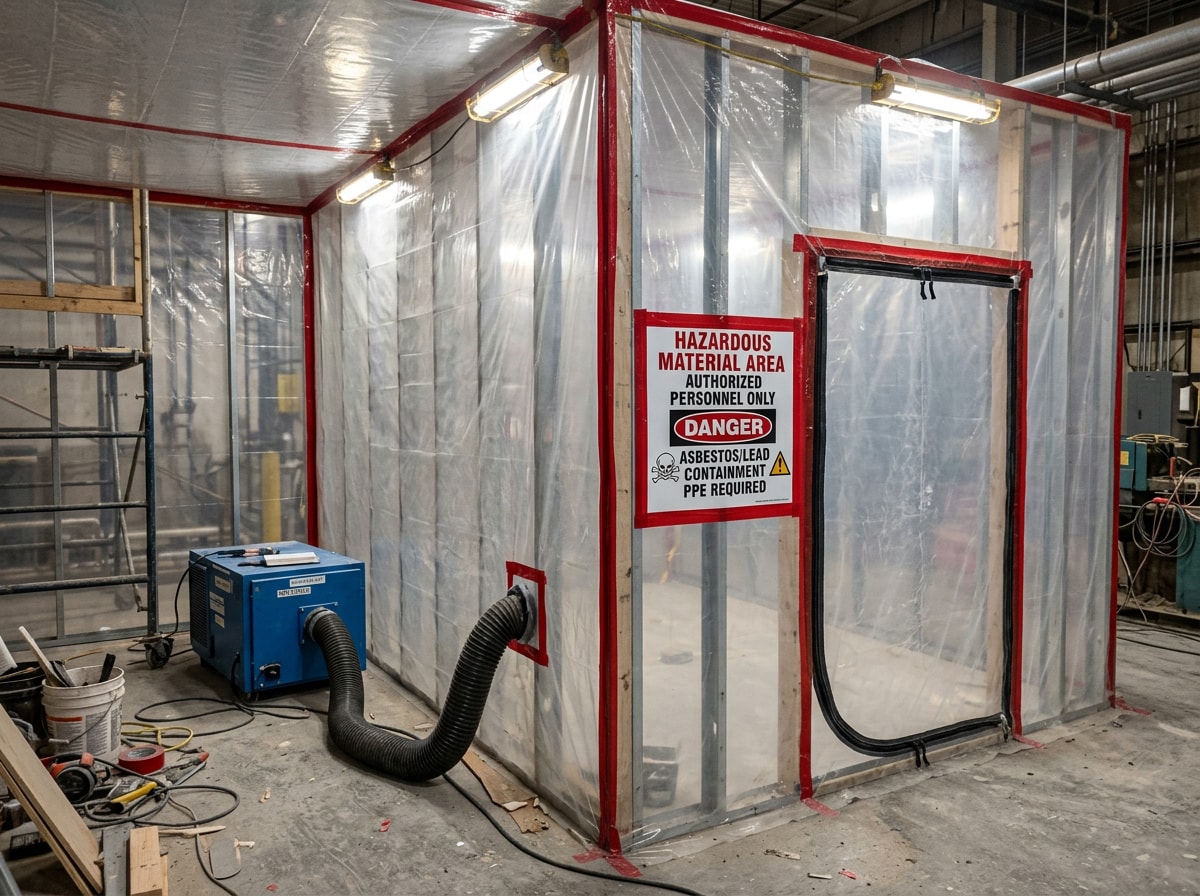
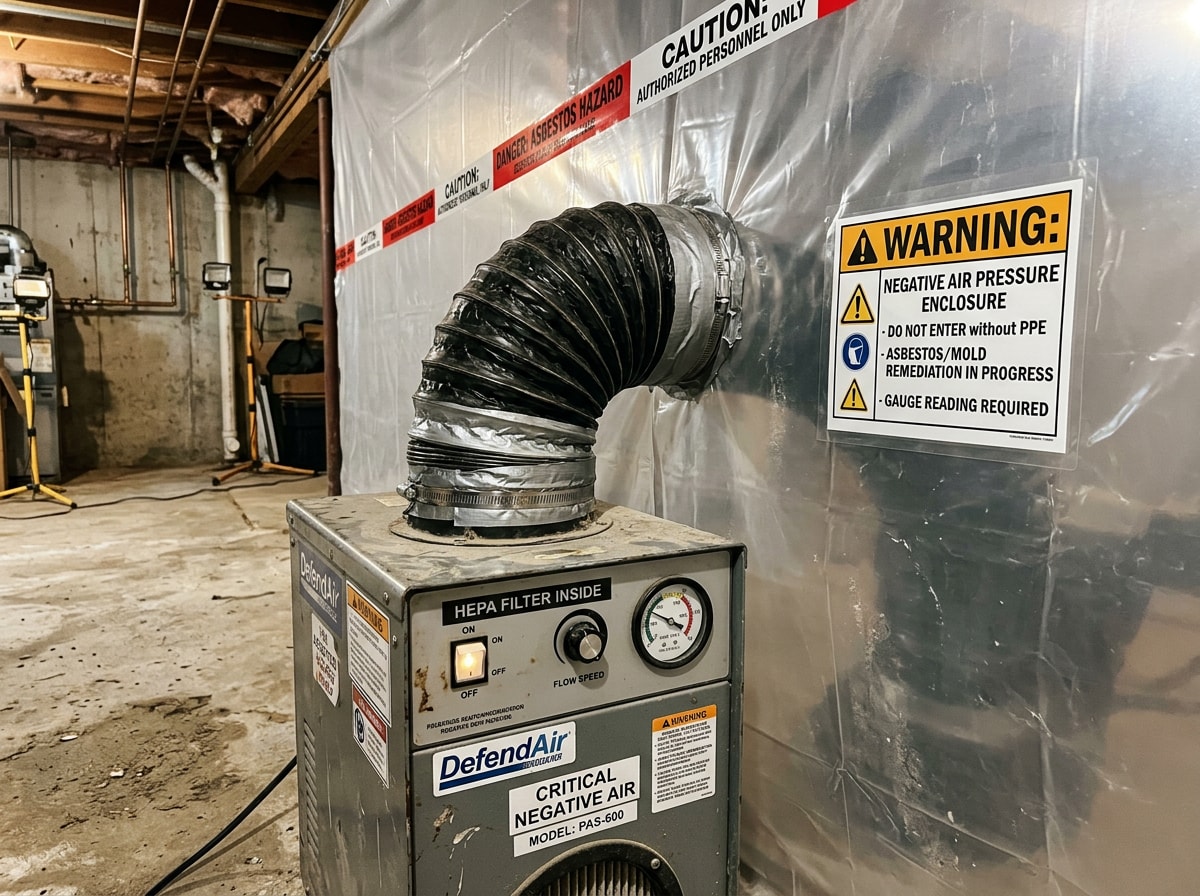
From there, certified removal follows strict containment protocols, including HEPA filtration and negative air pressure, with disposal handled according to federal and state rules. Lead abatement runs as a parallel service for homes built before 1978, since lead paint hazards require their own testing and removal procedures.
Where Is Asbestos Found in Older Wayne County Properties?
Asbestos is rarely spread across an entire property. It's typically isolated to a handful of specific materials and locations.
- Popcorn ceiling texture
- Floor tile and adhesive (mastic)
- Pipe and boiler insulation
- Textured or troweled wall paint
- Cement-asbestos ("transite") siding panels
- Crawl spaces and attics untouched since original construction
How the Abatement Process Works
A reputable abatement project follows a clear sequence, and understanding why each step exists makes the process far less intimidating.
- Inspection and testing — A certified inspector identifies suspected materials and collects samples for lab analysis. This confirms whether abatement is actually necessary before anything is scheduled.
- Scope planning — The contractor maps out containment boundaries, access points, and disposal logistics based on the test results.
- Containment setup — Work areas are sealed with plastic barriers and negative air pressure, keeping contaminated air from migrating into the rest of the home.
- Safe removal — Regulated materials are removed using approved wet-removal methods that limit airborne fiber release, paired with HEPA filtration to capture what's left in the air.
- Cleanup and disposal — Waste is bagged, labeled, and disposed of per state and federal hazardous-material rules.
Residents sometimes need to vacate the property temporarily during active removal. OSHA's construction asbestos standard covers construction, alteration, repair, maintenance, or renovation of structures that contain asbestos , and on multi-contractor job sites it specifically requires the crew disturbing asbestos to inform other contractors on-site of the hazard and the controls in place.
What Drives Asbestos Abatement Costs
Costs vary too much by scope to quote a single fixed number with confidence, but a few factors consistently drive the price: the type of material involved, the size of the contaminated area, labor requirements, and disposal fees.
Beyond the removal itself, homeowners often overlook smaller line items:
- Initial inspection and sampling fee
- Lab analysis for each sample
- Containment and labor for the removal itself
- Disposal fees at a licensed facility
- Post-project clearance inspection
Get quotes directly from licensed abatement contractors for the asbestos or lead work itself. If your project also involves exterior repairs once the site is cleared, contact us and our team can walk you through the roofing or siding side of the project.
About This Guide
This guide was put together by the HailstormPros team, licensed roofing and siding contractors serving Wayne County and the surrounding counties. We don't perform abatement ourselves, but we coordinate with licensed abatement contractors regularly on tear-off and storm-damage projects involving pre-1980 homes, and this guide reflects what we've seen homeowners need to know before that first phone call. Visit our homepage to see the rest of our service area, or reach out directly with questions about an upcoming project.
FAQ
How Do You Remove Asbestos?
Removal is a technical job reserved for trained, certified professionals, not a weekend project. It typically involves sealing off ventilation systems, properly containing and labeling asbestos materials, using wet-removal methods to limit airborne fibers, running HEPA vacuums and air cleaners, and disposing of all hazardous waste according to regulation.
What Is Asbestos Poisoning?
Asbestos poisoning, more accurately called asbestosis, develops when inhaled fibers cause scarring in lung tissue over time. Breathing high levels of asbestos fibers for a long time may result in scar-like tissue in the lungs and the pleural membrane, and people with asbestosis have difficulty breathing, often a cough, and in severe cases heart enlargement. Symptoms can take years to appear after exposure.
How Do I Know If a Material Contains Asbestos or Lead?
Visual inspection alone can't confirm asbestos or lead content. Only laboratory testing can. If you suspect exposure, contact your state or local health department or a regional EPA office to find out how to test your home and locate a company trained to remove or contain the fibers. This matters most in materials installed before the 1980s, when both substances were still widely used in residential construction.
Does a Contractor Need a License to Do Abatement Work in Michigan?
Yes. Michigan requires accredited supervisors and workers on asbestos projects, and the state's Asbestos Program conducts on-site evaluations of abatement activities and responds to complaints involving improper work practices . Ask any contractor you're considering for proof of current state accreditation before signing anything.
Will Homeowners Insurance Cover Asbestos Abatement?
It depends on your policy and the cause of the exposure. Abatement triggered by routine renovation is typically not covered, while abatement needed because of sudden storm or water damage sometimes is. Check with your carrier directly, and if the damage is storm-related, our insurance claim roof assistance team can help you document the claim.
What Are the Regulations Surrounding Asbestos and Lead Abatement?
Asbestos and lead removal are governed by strict federal and state regulations designed to protect both workers and building occupants, covering residential and commercial projects alike. The EPA sets the baseline health and handling rules, and Michigan's EGLE and MIOSHA programs add state-level notification, licensing, and inspection requirements on top of that.